

Chandan Sarkar
★★★★★Google review excerpt · View reviewer on Google (opens in a new tab)Support-Support is also good.Whenever I called for support the came forwarde and guided me.

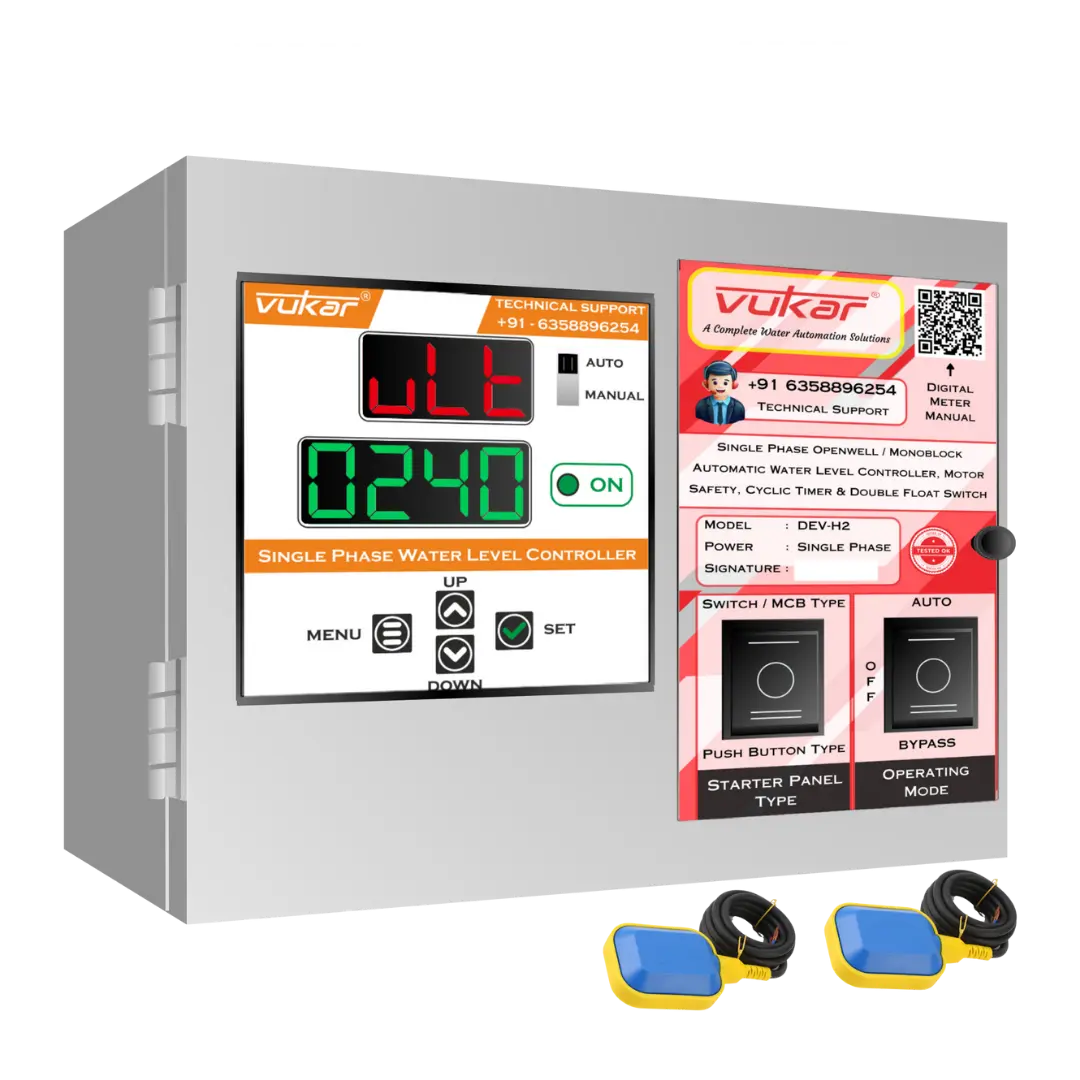
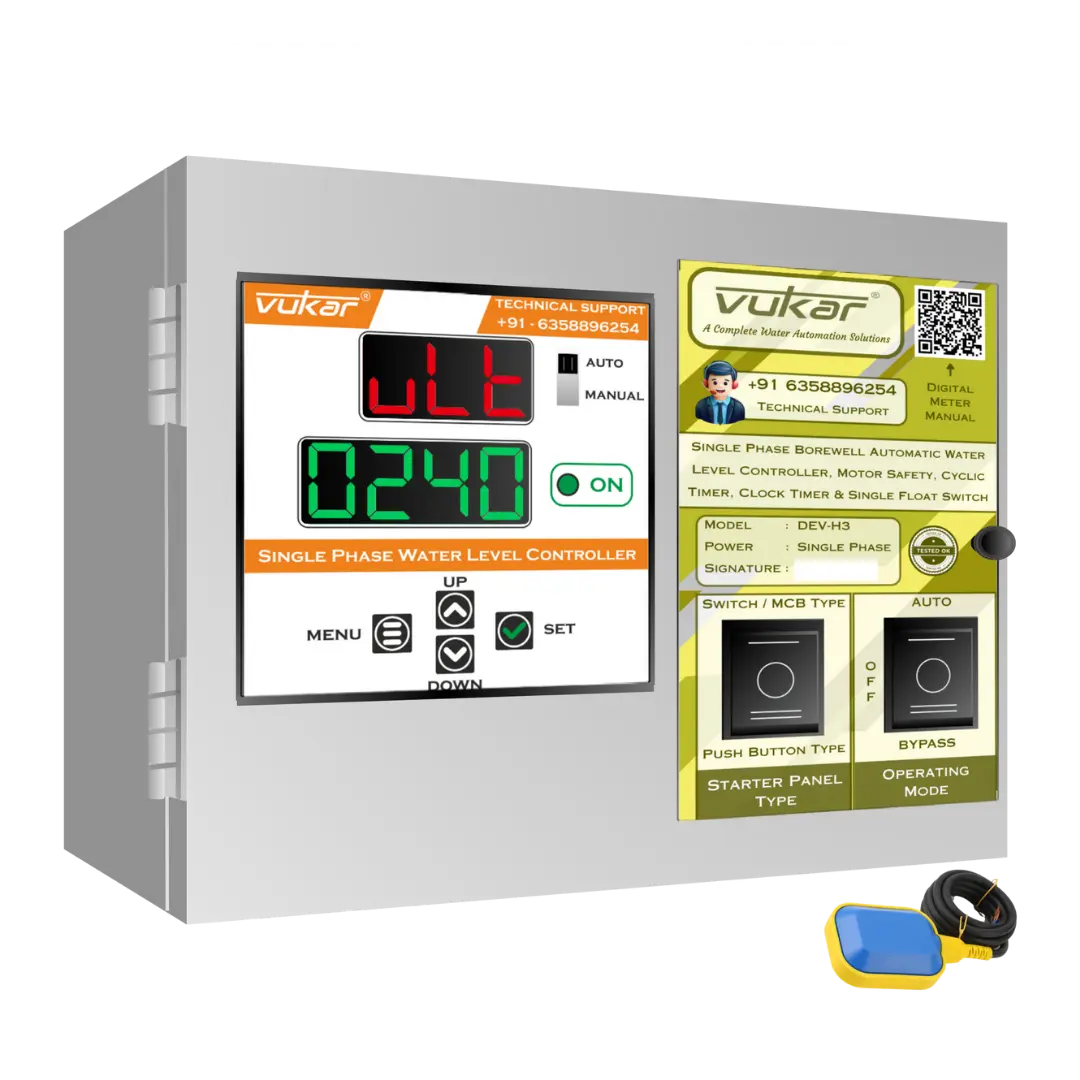
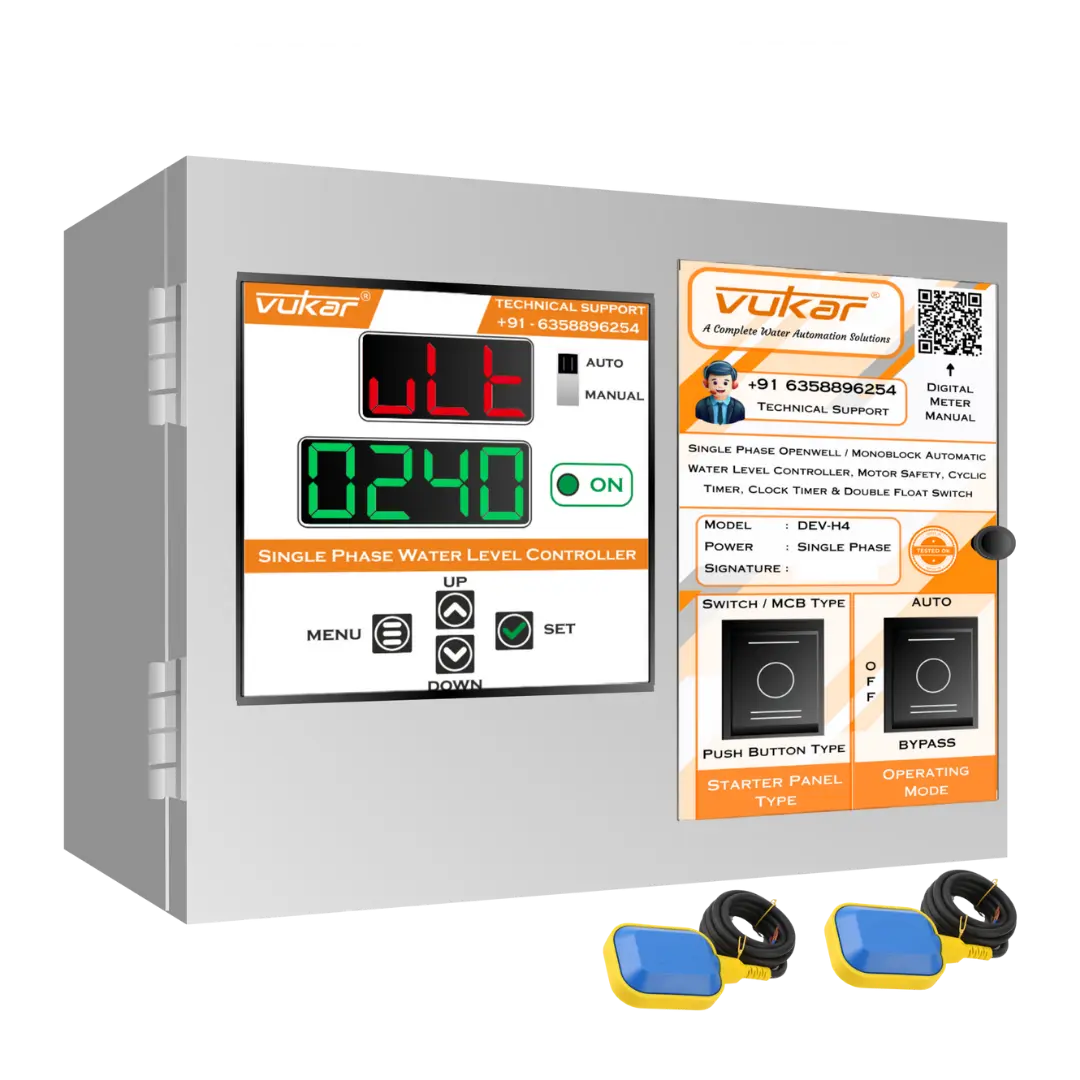
Compare Single Phase Borewell Level Control Panels (BOA). Match the pump application,...

Compare three phase digital auto switches for pump-starter control. Check compatibility with...

Compare VUKAR models before you buy VUKAR pricelist and full model comparison...

Compare Three Phase Borewell DOL Panels with Timer (TPM) for your pump...

Read four-pole MCB diagrams using exact terminal pairs, neutral markings and the board schedule, with a documented ABB comparison and a clear pump-circuit boundary.
Read four-pole MCB diagrams using exact terminal pairs, neutral markings and the board schedule, with a documented ABB comparison and a clear pump-circuit boundary.

Separate breaker position, trip indication and motor-running information before choosing an auxiliary contact and its receiving circuit.
Separate breaker position, trip indication and motor-running information before choosing an auxiliary contact and its receiving circuit.

Use the exact graph, convert current to I/In and report both time boundaries instead of treating an MCB curve as one fixed delay.
Use the exact graph, convert current to I/In and report both time boundaries instead of treating an MCB curve as one fixed delay.

A numbered manufacturer cutaway shows which MCB parts sense current, release the mechanism and interrupt it. Learn what external inspection can establish.
A numbered manufacturer cutaway shows which MCB parts sense current, release the mechanism and interrupt it. Learn what external inspection can establish.

Read a 100/5 A current transformer label and compare CT ratios using motor data, the meter manual and a simple display error example.
Read a 100/5 A current transformer label and compare CT ratios using motor data, the meter manual and a simple display error example.

Choose a motor protection relay by what can fail, what the relay can measure, and what the starter should do when a fault clears.
Choose a motor protection relay by what can fail, what the relay can measure, and what the starter should do when a fault clears.

Use the code, time and operating state to help an electrician trace a high- or low-voltage pump fault.
Use the code, time and operating state to help an electrician trace a high- or low-voltage pump fault.

Before choosing a pump panel, identify the complete leakage-protection chain. Compare sensing, switching, overcurrent protection and documented tests.
Before choosing a pump panel, identify the complete leakage-protection chain. Compare sensing, switching, overcurrent protection and documented tests.