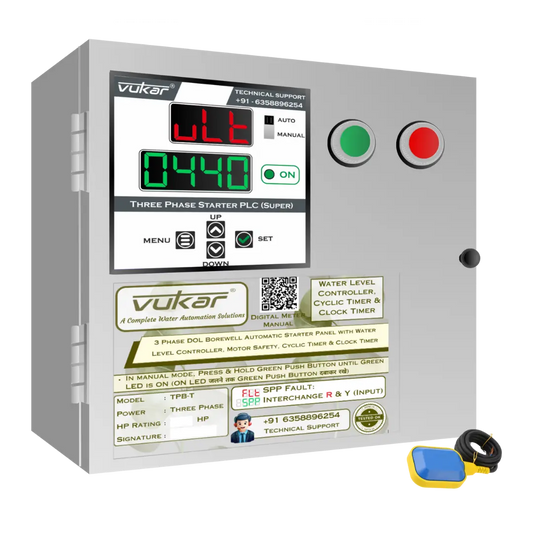
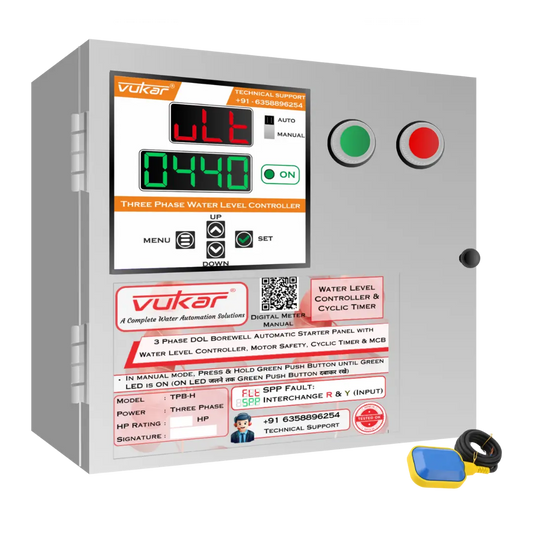
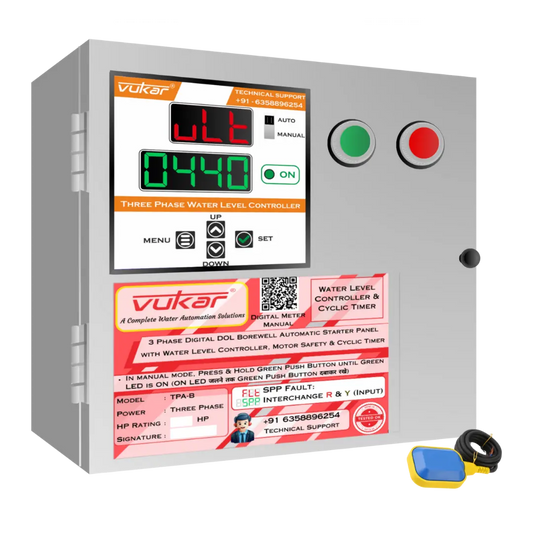
Water Pump Keeps Turning On and Off: What the Pattern Tells You
Mohit VekariaIf your water pump keeps turning on and off, note what happened just before it stopped. A planned timer pause usually follows the programmed run and rest pattern. A roof-tank float can change state near its switching level. A low source can stop a transfer pump, and a protection fault can stop the motor even when the tank still needs water. A pressure booster has a different job. It responds to pressure or flow when you use water. The quickest clue is the combination of run time, tank level, flow and what the panel shows.
First, work out which pump is cycling. A house can have one pump filling the roof tank and another boosting pressure to the taps. Listen from a dry, safe place and note which controller or pump display changes. If the pump starts and stops in rapid bursts, the breaker trips again, or there is smoke, a burning smell or water near the electrics, stop using the equipment and call a qualified electrician or pump technician. Use a normal external stop control only if it is safe to reach. Stay clear of a wet or damaged panel.
What happens just before the pump stops?
| What you notice | Where to look first |
|---|---|
| The pump runs and rests for familiar periods while the tank still needs water. | Compare the pattern with the programmed cyclic timer and the controller display. |
| The motor switches rapidly as water sloshes near a tank sensor. | Have the installer look at float travel and the position of the incoming water jet. |
| The roof tank is low, but the lower tank drops near its cutoff each time the motor stops. | Record both water levels. The source may be falling below its permitted level. |
| A fault appears, the pump stops, and another attempt follows after a wait. | Save the exact fault and wait time for the technician. |
| The pressure booster wakes up briefly when no one is using water. | Look for visible water use or leaks. A technician can assess the pressure system. |

Use the table as a starting point. Two stops that sound identical can mean different things. A pump can pause after a fixed run, while a protection controller can wait a fixed time before trying again. The status shown at the stop helps tell those apart. A panel can clear a message before you get there. If a photo can be taken safely, capture the display while the message is still visible.
When the water pump stops after a few seconds
A cyclic timer gives the motor a run period and a rest period. On a suitable borewell setup, that rest gives the water source time to recover. A regular pause can therefore be part of normal operation. The programmed cycle is only one input on some controllers. A full tank or a protection event can stop a run before the timer reaches its planned end. See the VUKAR guide to cyclic, clock and auto-off timers for what each timer does.
Suppose a pump normally runs for several minutes and then rests. Today it stops a few seconds after starting, waits and repeats. That change is worth reporting even if the waits are regular. Write down the fault text and whether the pump delivered water before stopping. On the VUKAR DEV-H3, for example, the cyclic timer and programmable dry-run retry are separate features. The retry can follow a detected dry run. A similar-looking wait on a different model can have a different cause.
The start and stop times alone leave out an important detail. Did water reach the roof before the motor stopped? A technician may take a different route when there was a steady stream than when the motor ran briefly and the inlet stayed dry. Give both observations if you can see the inlet safely. Note whether the display stayed on at the stop or went blank. A panel that lost power leaves a different clue from one that stayed on and showed a fault. Use the manual for the installed model to find the names of the indicators you saw.
A low sump and a borewell dry-run trip also give the technician different information. A sump float can tell a controller that the lower tank has reached its stop level. A borewell controller that senses low motor load is using an electrical measurement to detect a possible loss of water. Share the actual source type with the technician. The borewell dry-run protection guide explains the difference. Leave trip limits, timers and reset settings to the qualified installer.

When the water pump starts and stops near the float
A cable float needs room to move as the water rises or falls. An inlet jet can push it about, or the float can brush a pipe, wall or ladder. If the signal changes each time water splashes across the float, the motor may stop near the same level and start again after the water settles. Some controllers filter brief changes. Others use different start and stop points. The response depends on the fitted controller and float.
Watch from a safe place when the system is already in use. If the tank inlet is visible, note whether the stop lines up with a burst of incoming water or a certain water level. Tell the installer where the float sits relative to the inlet and whether the problem began after a tank cleaning or pipe change. Leave the float and cable alone. The SJE Rhombus troubleshooting guide lists float position, free cable length, obstructions and cable damage as things a technician can investigate.
A lower tank can also hover near its cutoff. If a slow supply is topping up the sump, the pump can take the water out faster than it arrives. Each run draws the level back down. Record whether the roof tank is still asking for water and what the sump was doing at each stop. The sump-to-overhead-tank guide shows why the two tank signals have different jobs.
One useful detail is which mark the pump reaches on each run. If it fills the roof tank all the way to its normal full mark and stops, that looks like the end of a fill. If it stops well below that mark while the sump shows low, give the installer both observations. This matters when the household only sees that the upstairs tank is taking longer to fill. The lower tank can be short of water even while the roof-tank float is working as intended.

Water pump short cycling on a pressure booster
If the pressure booster keeps starting, look at when people use water. A booster that feeds the taps can start when pressure falls or a controller detects flow. A small leak or quiet demand, such as a toilet cistern refilling, can make it run briefly. Note whether cycling happens while a tap is open, immediately after it closes, or while the house is quiet. Look for visible drips and listen for a cistern that keeps filling. Grundfos lists leaks as one cause of repeated starts and advises professional help when pump sizing may be involved.
Pressure systems also vary. On some installations, a non-return valve that lets pressure bleed back or a pressure tank with unsuitable air charge can contribute to cycling. Grundfos lists those causes in its PM TWIN pressure manager instructions. Give the technician your pump and pressure-controller model before they select a test. A cycling booster that runs with the roof tank full can still be responding to a pressure problem downstream. The roof-tank float may belong to a different circuit.
Record the pattern for the installer
You do not need to wait through several rapid starts. If it is safe to stay near the equipment, note one stop and use any earlier times you already have. Write what you saw in plain words. “The pump stopped while the roof tank was low and the sump indicator changed” is more useful than “the controller failed.” Take a photo of the label and the closed panel display if they are in easy reach. Give the technician the make and model, which pump is affected, and when the problem started.
Here is an illustrative service log for a sump-to-roof system. The times are made up to show how to record the event. They are not recommended run or rest settings.
| Time | What the owner saw or heard |
|---|---|
| 7:12:00 | Roof tank was low. Transfer pump started. Water reached the roof inlet. |
| 7:12:24 | Motor stopped. Roof tank was still low. The sump indicator showed low. |
| 7:13:10 | Lower tank was still refilling. Owner noted the display and called the installer. |

Add one line about what changed recently. A new float, a moved pipe, work on the starter or a new pressure pump all help the technician choose the first place to look. If the pump now stays off even though the roof tank is low, use the automatic pump start troubleshooting guide. For a recently installed controller, hand over the original test record from the water level controller installation guide along with the new observations.