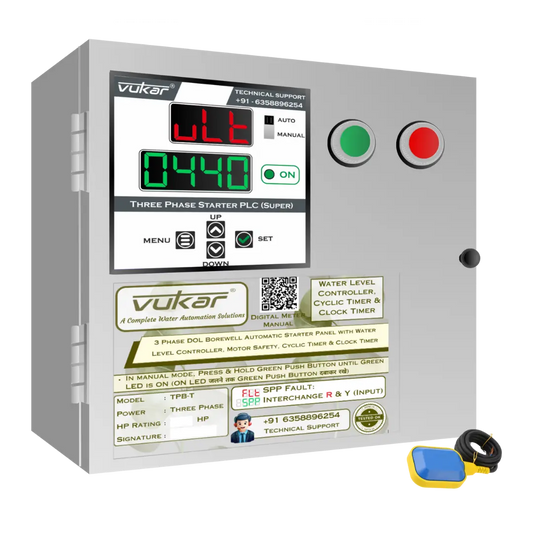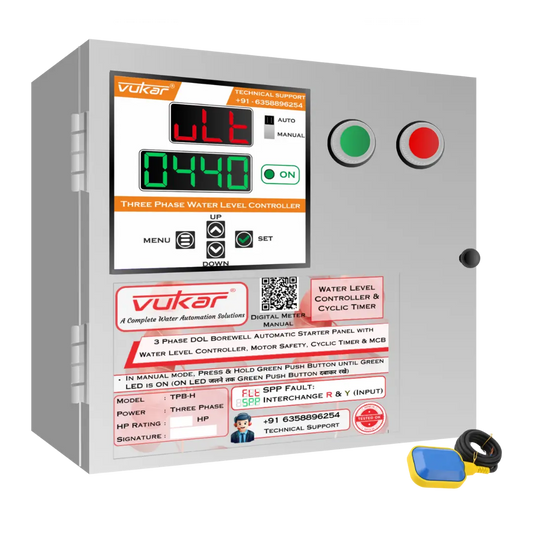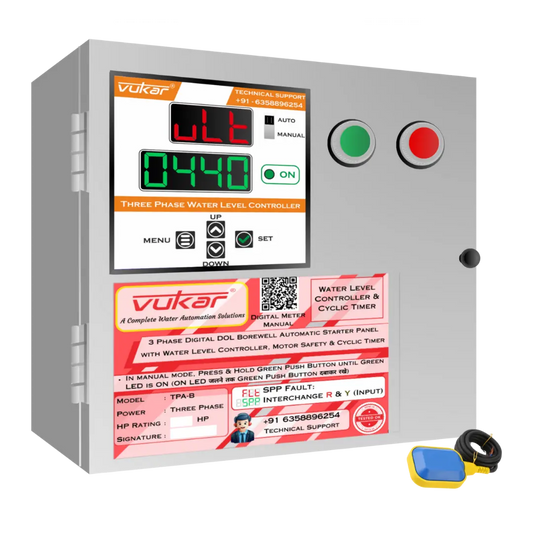

Water Pump Not Starting Automatically When the Tank Is Low?
Mohit VekariaFor a water pump not starting automatically when the roof tank is low, begin with what the tank and the closed control panel show. The roof tank must reach the level that calls for a refill. The controller also needs to be in Auto, and any lower-tank sensor must allow the pump to run. A timer or a fault can hold the start even after those conditions are met. When the controller shows a start command and the motor stays silent, tell the electrician where the sequence stopped.
Observe from a dry, safe place. Keep the panel closed and leave the sensor wires alone. If there is smoke, a burning smell, water around the electrical equipment or repeated tripping, keep clear and call a qualified electrician. A pump in Auto can start on its own.

If the controller was just fitted, share the four commissioning tests with your installer so they can repeat the relevant test safely.
Follow the refill signal from the roof tank to the motor
Start with the first row that matches what you see. Panel symbols and messages vary, so use the labels for your model. A separate controller may show a request while the starter beside it stays off.
| What you see | What it may mean | What to record |
|---|---|---|
| Water is above the refill mark | The tank has yet to ask for water. | Level against the usual start mark. |
| The panel shows Manual or Off | The automatic refill sequence may be inactive. | The mode as found. |
| The roof tank is low and the sump is low | The lower-tank signal can block the pump. | Both levels and when the sump refilled. |
| The panel shows a wait or a fault | A timer or protection may be holding the start. | The exact display and the time. |
| A start signal appears but the motor stays silent | The technician needs to trace the starter response. | The signal, any click and whether the motor moved. |
Did the roof tank reach its refill level?
Half a tank can look low from the kitchen. The controller uses the refill level set at installation. In a system with separate start and stop levels, the pump may stay off while the tank drains through the space between those marks. That is normal. It lets you draw some water before the pump needs to run again.
If the water pump is not starting when the tank is low compared with its usual start point, ask what changed. A tank cleaning or a sensor replacement can shift the point at which the controller sees a refill request. A cable float needs room to tilt. A pipe or a wall can hold it in one position. SJE Rhombus’s float switch guide shows why position and obstructions matter. Report a visible change from safe access. Leave the float and its mounting for the installer.
If the tank level and the panel indication disagree, note both. A photograph of the display with the actual tank level written beside it gives the technician a starting point for tracing the input. A faulty sensor is one possibility. The cable or the way the input is set up can also be involved.
A new installation and a system that worked yesterday give the technician different starting points. On a new installation, share the handover notes showing the expected refill mark. On a system that used to work, say when you last saw it refill on its own. If the trouble appeared immediately after a float or controller was replaced, give the installer the old and new model numbers if you have them.
Auto mode and the water in the sump
Read the mode on the panel without changing it for a test. Some pump systems use a timer to stop a run that a person starts. Others use a tank sensor to request a start and then stop the pump at full. If the pump has never started from a low tank, tell the electrician that when you ask what type of control is fitted. The automatic water level controller buying guide explains the different arrangements.
In a sump-to-roof installation, the two tanks have different jobs. The roof tank asks for a refill. The sump sensor can withhold permission while the source is too low to supply the pump. After the sump refills, the controller may still have a restart condition or a wait to complete. Write down the order in which the tank levels changed. See the sump and overhead tank guide for the two signals and how they work together.

Is the controller waiting or showing a fault?
After a power cut, a controller may wait before allowing the motor to start. A cyclic timer can also keep it off during the rest part of a schedule. The VUKAR pump timer guide explains how timed runs, rest periods and clock schedules differ. Record when the power returned, what appeared on the panel and whether the display changed. The wait depends on the model and its settings.
For the VUKAR DEV-H2, the product specification lists a power-on delay and a separate dry-run restart timer. Treat those as different events when you describe the symptom. A delay immediately after the electricity returns has a different history from a stop after the pump tried to draw water.
If you see a fault, photograph the exact code. The VUKAR product manual library helps match the model to its instructions. A dry-run or low-load message needs context. A water source that has fallen low is one possible cause. The pump and its protection settings can also matter, as Franklin Electric’s troubleshooting guidance illustrates for its own equipment. Leave diagnosis and any restart decision to the technician when a fault repeats.
The order can help. A report that the panel came on after an outage and showed a wait gives the installer a different lead from a report that the motor briefly ran before the display showed a fault. Keep the photograph from the first event. It gives the technician a record even if the display returns to its usual reading before the visit.

The controller calls for a start and the motor stays off
An automatic pump controller not turning on the motor can look the same from the roof whether the start signal was blocked or the starter failed to respond. The panel indication helps separate the two. If it shows the pump is being asked to start, the next step is for a qualified electrician to trace that signal through the starter and motor circuit. A starter may use a contactor, an electrical switch that carries the motor load. Its response depends on the control supply and the protection circuit. Schneider Electric explains the effect of low control voltage on a contactor.
A click may come from a relay or a contactor. Record it along with what the motor did. If a panel display is blank while other equipment has power, say that too. The electrician can work out whether the controller has its own supply problem. Leave the panel shut even if the front display is dark.
If you can see two boxes, take a photo of both fronts from the same spot. One can be the level controller and the other the motor starter. Reporting which display lit up and where you heard the click can help the technician identify the right part of the circuit to test. Leave any attempt to start the motor by hand for that visit.
The motor runs and the roof tank still gets no water
This symptom sends the technician along the water path as well as the controls. Say whether you heard the motor run and whether any flow reached the tank inlet. Water can fail to reach the roof because the source is low, the inlet is blocked or air has entered the inlet of a surface pump. The causes depend on the pump and pipe layout. The Grundfos pump instructions list separate troubleshooting steps for a stopped motor and a pump that runs without delivering water. If the motor keeps running with no flow, use its normal stop control only if it is dry and safe to reach. Keep it stopped and arrange service.

Water level controller not working? What to send the installer
Send the installer a photo of the closed panel, its model label and the displayed mode or code. Add the approximate levels of both tanks, the time power returned if relevant and whether you heard the motor or saw water reach the roof. Mention work done since the last normal refill, such as a tank clean or a new float. Use details you can get safely from outside the equipment.
After repair, ask the installer to show one supervised refill under the intended settings. Include the low-level start, the full-tank stop and the lower-tank stop where fitted. If your symptom is a motor that runs past the full point, use the full-tank pump failure guide to describe that separate fault.