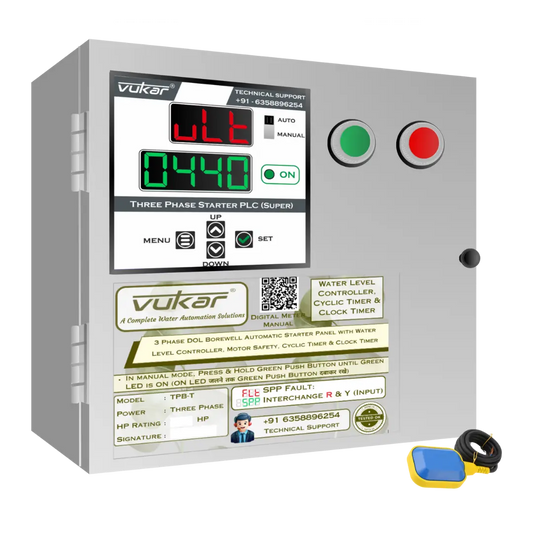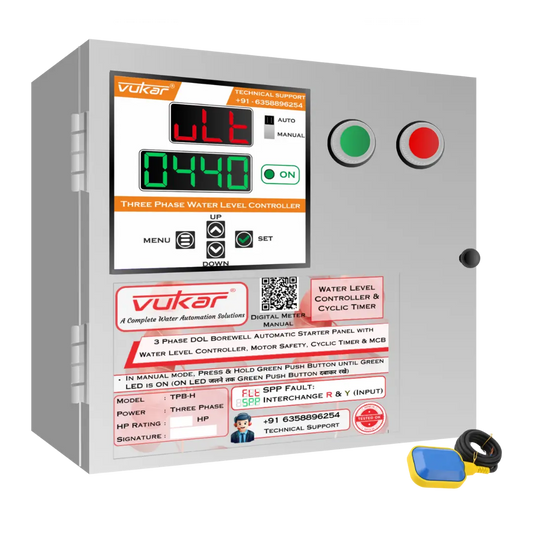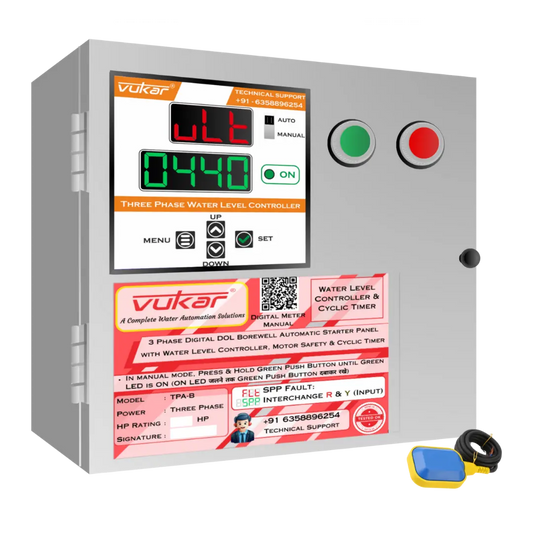

Tank Reading Wrong or Pump Stops Early? TPM-W Level Display and RUN Timer Checks
Mohit VekariaIf your TPM-W tank level display reading looks wrong, compare the real level with the float indicator and write down the pump’s RUN or rest. The built-in miniature circuit breaker, or MCB, has a separate role. If its position is visible, record it as a separate observation.
Start with what the display shows
| Visible state | What it can mean and what to do |
|---|---|
| Level indication and actual tank level differ | Compare both at one time and record the pump’s state separately. The float reports the level on this model. If the difference persists, send both observations to the installer before any setting changes. |
| The display suggests operation, but water is absent | The command and water delivery are separate observations. Note whether the motor actually ran and whether water reached the usual outlet. Report the first missing response. In a supervised return to service, confirm both the motor response and steady delivery. |
| An unfamiliar indication, an unexpected stop or a visible trip | Record the exact characters or lights, the time and the motor state from outside the closed enclosure. Leave protection values as commissioned. If the stop repeats or a breaker has tripped, leave further operation to a qualified electrician. |
Start with the installed unit
Record the model and revision from the label, the motor nameplate and the active mode. Similar panels can have different menus. Use the installed revision’s guide for any setting, its units and the behavior of the selected mode.

Use a separate record for the level indicator
Record the displayed tank state and the real water level from a safe location. Use two observations at different levels when that is practical and safe. Write down the time of each reading, whether the pump was running and what the display showed. If the real level changes while the indicator stays the same, give the readings to the installer. Keep the sensor connections and panel cover undisturbed during this observation.
This model’s level display is an indicator. The controller does not use that reading as its automatic fill command. Keep the evidence for the indicator separate from the evidence for a motor stop. For a timer-related stop, use the approved duration and elapsed motor time. For a visible protection or breaker event, record exactly what changed. A display that says full by itself does not explain a stop on an indicator-only starter.
A worked example · TPM-W
Suppose TPM-W still indicates the old tank level after water has been used. Later the motor stops. Record the mismatch time first and whether the visible breaker position changed at the motor stop. If the pump rest matches its approved cycle, give the installer that as context for the level signal. If the MCB visibly trips, end the observation and leave the circuit to the electrician. The tank reading alone cannot explain a breaker trip.
Choose RUN and RST from the water supply
RUN is the elapsed pump-on time. RST is the planned pause between cyclic runs in the selected mode. Choose RUN based on how long the source can deliver a steady flow, the space available where the water goes, and the motor maker’s permitted operating conditions. For RST, consider how long the source needs to recover and any minimum time between starts for the motor.
To estimate starts per hour during an uninterrupted cycle, add RUN and RST in minutes and divide 60 by the total. For example, 10 minutes on and 20 minutes off gives about two planned starts per hour. These are example values. Include any separate starts from other controls, power recovery or fault recovery when the installer reviews the motor’s actual start frequency.
Change one condition between watched tests
Begin a test with the mode and relevant settings written down. Change one approved timing or operating condition at a time with the installer. Then observe the pump from the start permission through the actual stop. If two settings change together, a normal or unexpected result is harder to explain later.
Record the actual and displayed tank levels at the same moment. In a separate line, record whether the pump was in RUN or rest, along with the elapsed time. When the difference repeats, compare those records with the installer before changing a cyclic setting.

Keep supply events separate from the timer
On this three-phase model, a supply or phase-protection indication is a separate event from the end of a scheduled run. Record the indication as it appeared, its time and whether the pump was already running. A missing or unstable phase can require qualified diagnosis even when other equipment nearby has power. The electrician can compare the incoming supply, phase sequence and the installed protection settings against the approved record.
A changed indication can help the electrician decide where to measure. It cannot identify which wire or connection needs work. Keep the panel closed and leave tests of phase voltage, sequence and current to a qualified person. If the pump stops repeatedly or the breaker trips, leave further operation to the electrician. Give them the model, the motor nameplate and the exact time of the event.
Separate an MCB trip from a controller stop
An MCB is a miniature circuit breaker. A visibly tripped breaker and a motor stopped by the timer are different observations. If an MCB is fitted and its state can be seen without opening a cover, record whether it changed and what the controller display showed at the same moment. If the breaker trips, leave diagnosis to an electrician.
A controller can stop the motor while the circuit breaker stays in its normal position. A timer can also end a normal run with the breaker in that position. Use the elapsed time, the active mode and any visible indication together. When the breaker or a protection indication returns, save the observations for service before another attempt to run the pump.
Follow the command to the pump
A controller can show a request while the motor is still off. A starter switches motor power when the control circuit permits it. Observe the display, the starter’s visible response and water delivery as separate facts. These observations give the electrician a place to start without asking you to open the enclosure or touch conductors.
If the display shows that the pump should be running but there is no water, write down whether you could see or hear the motor run from a safe location. If the motor runs but delivery is absent or weak, record how long it ran and when the flow changed. Keep the display photo and the times together so the installer can compare them with the actual settings.
Prepare the installation for a watched test
Choose a time when the source has water, the receiving point has room for delivery and the operator can observe from a safe place. Agree with the installer on what counts as a successful start and stop. Use the normal operating controls. Have the installer handle any changes to the electrical circuit or protection settings.
Tell everyone working near the pump when an automatic start could occur. Keep the enclosure closed while observing the display. If the observed behavior differs from the manual or the approved record, stop the test in the normal safe way and write down what happened before any values are changed.
Read the protection indication with the operating record
For overload, note the moment the motor stopped and whether it had reached normal running speed. The configured current response can flag a motor, supply or setup problem. For dry run, record whether water reached the outlet and when delivery weakened. An electrician can compare those events with the installed protection setup and water source.
For a voltage indication, record the time and any interruption you observed. Copy the exact characters on the display. Ask the electrician to use the instructions for the installed revision to identify the indication and decide on recovery. If the fault repeats, leave further operation to the electrician.

Send the installer one usable event record
Use the exact model and revision at the top of your note. Add the symptom and the active operating mode. On the next line, put the actual clock time, elapsed motor time if known, the visible indication and the water condition. State what you expected in the same note. If a detail could not be observed safely, leave it blank and tell the electrician.
Avoid resetting first and trying to reconstruct the event later. The display, tank condition or rest period can change once the equipment is stopped or power returns. If the electrician authorizes another watched test, agree on the expected start and stop in advance and keep the same model record. If a breaker trips, a protection indication returns or the panel appears damaged, leave further operation to the electrician.