
Water Pump Timer Switch Supplier in Vijayapura
Mohit Vekaria
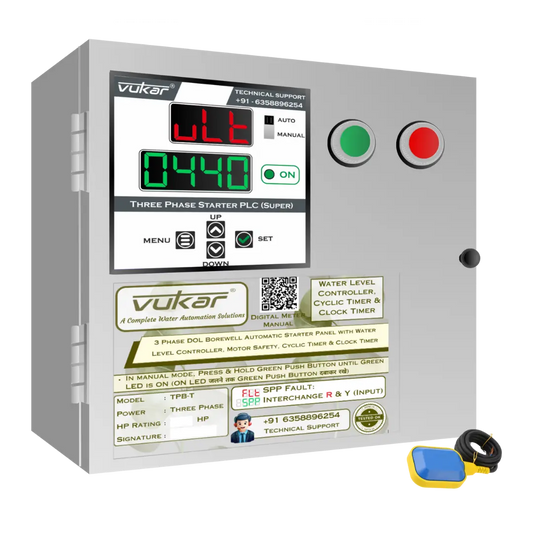
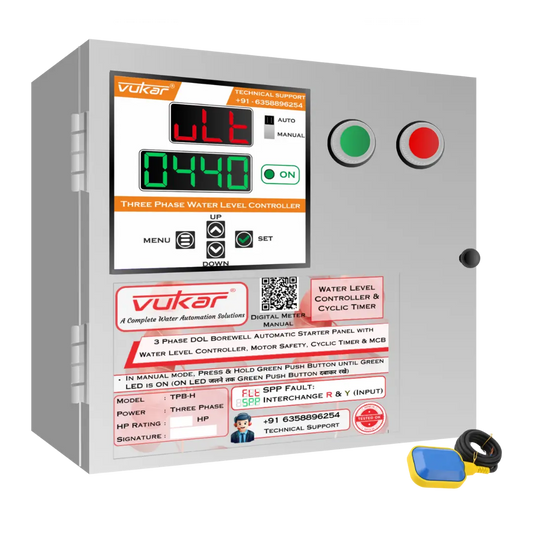
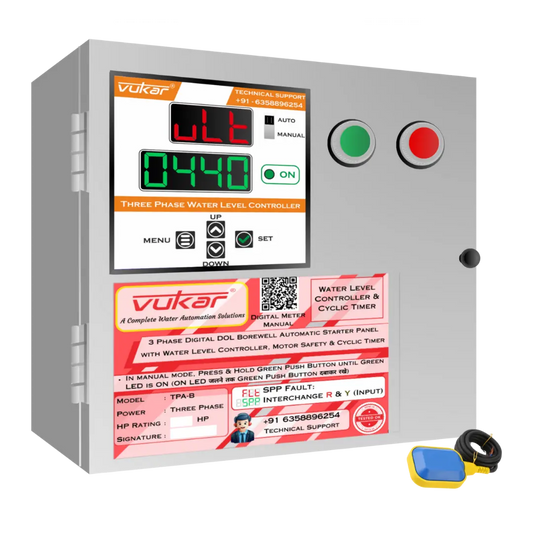
Looking for a water pump timer switch supplier in Vijayapura? Consider the VUKAR DEV-P2 if you already have a compatible three-phase starter and need two separate times to pump from a farm pond. Decide how much water must stay in the pond before you choose the minutes for either run. The clock can place each run in the day. A separate level safeguard may be needed to keep the reserve when flow or water level changes.
Give the farm pond a reserve
The NABARD Vijayapura district plan describes irrigation from borewells and other groundwater sources alongside canals, ponds and check dams. The 2022–23 district plan describes canals under the Upper Krishna Project and identifies low-lying areas near some canals where ponds could be developed. At a farm that stores water between deliveries, the canal turn and the pond pump’s operating window can be separate. Set the timer around the water held on your farm and the hours when the pump can run.
Pick a low mark that leaves the reserve you need and keeps the pump intake within the limits specified for your setup. Use a volume reading that accounts for the shape of your pond. A sloped pond can hold a different number of litres per centimetre at different depths. Keep the water above the chosen mark and the volume below it on separate lines in the log. This makes the usable water budget visible at the start of the day.

Divide usable water between two runs
Suppose the pond has 3,000 litres before the first run and you want to leave 1,200 litres at the end. That gives you 1,800 litres to pump if no water comes in. At a measured 40 litres per minute, your two runs together can use 45 minutes. In this example the morning job takes 20 minutes and the evening job gets the remaining 25 minutes.
| Run | Time at 40 L/min | Water used |
|---|---|---|
| Morning | 20 min | 800 L |
| Evening | 25 min | 1,000 L |
| Total | 45 min | 1,800 L |
Now suppose the actual flow is 50 litres per minute. The same 45 minutes takes 2,250 litres and leaves only 750 litres. A timer controls minutes. A low-level safeguard protects the chosen water mark. Keep some margin when you plan a supervised run and ask an installer to specify a separate low-level stop if the pump must run unattended.
What should a three-phase pump timer control?
The DEV-P2 has clock and cyclic timers for a compatible three-phase pump starter. Clock timing places the two jobs at the times you choose. Cyclic timing repeats run and rest periods when the job calls for that pattern. The VUKAR three-phase switch comparison lists DEV-P2 as a control unit and shows that its range has no built-in water-level controller. Where a low mark has to stop the pump, include that requirement in the quote. Give the supplier the motor nameplate details and the starter type so an electrician can assess the fit.
Put the date next to every reading. A fresh inflow between the two runs changes the starting volume for the evening. A pump that sounds normal can still move a different amount of water. Write down the actual reading before releasing the second run.
Keep a space for the actual minutes next to the planned minutes. If the morning job needed less water than expected, leave those litres in the pond until the evening reading tells you they can be used. A written limit is easier to share than a setting on a display.

Write down what a missed run should do
Record the morning litres actually used and the level before the evening run. If power cuts a run short, let the operator decide what to carry forward from the reading. A full make-up run could use water already set aside for the evening. Have the installer show the restart behaviour with the proposed settings and record who can allow a make-up run. Send the two operating windows, the measured outlet flow and the minimum pond level with your enquiry.
When you hand the record to another person, show them the mark at the pond. Have them point out the reading they will use before each run. Agree who will stop the pump if the level reaches the mark earlier than planned. Record a short first run with someone present so the next shift knows what the normal flow looks like. Leave the measurement method next to the number so another operator can repeat it.