Drip Irrigation Pump Timers: Cyclic Runs or Fixed Clock Hours?
Mohit VekariaShare
Use cyclic timing when a drip-irrigation plan calls for repeated runs and rests. Use clock timing when pumping must follow chosen times of day. In either case, the starter controls the compatible pump; it should not be assumed to manage every irrigation zone or measure the water delivered.
The missed-start and late-stop problem
When each watering period depends on manual switching, the operator has to be available at both ends. A missed start or late stop changes the planned irrigation routine.
A suitable local timer panel can repeat the agreed pump instruction. It does not choose that instruction from crop conditions. The duration and frequency still need to come from the irrigation plan.
Choose the rule that matches the system
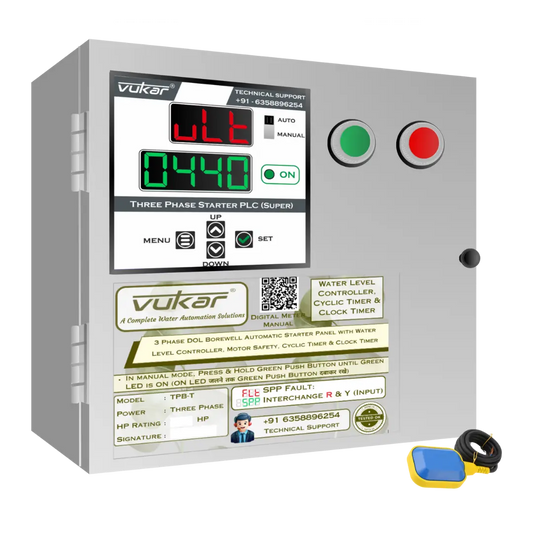
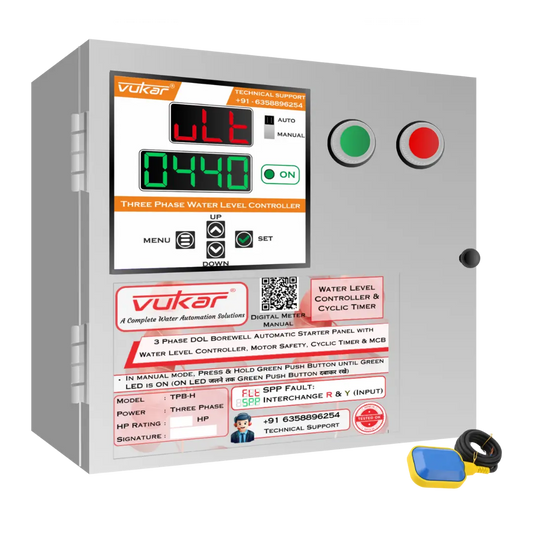
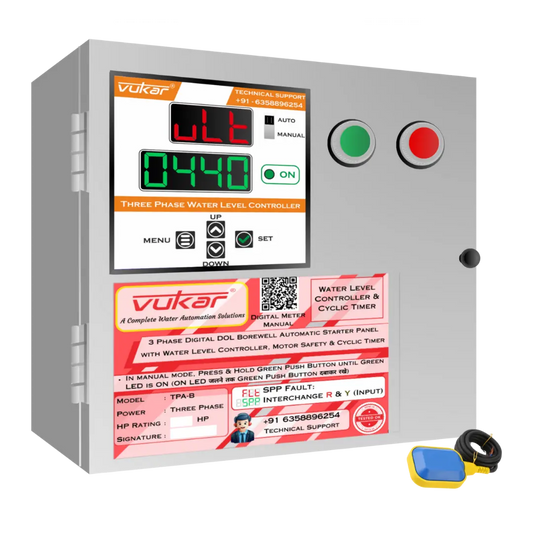
For repeating ON/OFF periods, BOM-G is the candidate for a compatible single-phase borewell/openwell motor and TPM-A for a compatible three-phase DOL motor.
For fixed clock operation, assess BOM-T or TPM-T for the corresponding compatible motor. For another pump type, check the appropriate MOM or OPM family rather than forcing the motor into a borewell starting arrangement.
TPM-A's confirmed cyclic adjustment is in minutes. Verify all other timing limits and the exact variant's power-return behaviour before relying on a particular sequence.
One pump timer is not a zone controller
A field may have several valve-controlled sections with different requirements. Someone or another controller still needs to select the active route unless a supported valve-control arrangement is provided.
Specify how the pump receives permission, which valves are open and what happens if there is no suitable flow path. Do not assume a standard starter supplies independent valve outputs, pressure regulation or fertigation control.
Time does not prove delivered water
Filter condition, pressure, emitter condition, source availability and the selected zone affect actual delivery. The same running duration is not proof that every emitter supplied the intended quantity.
Where volume matters, use an appropriate measurement and irrigation-management method. Where soil conditions should decide watering, a fixed timer alone is incomplete. Motor dry-run protection does not replace the rest of that system assessment.
Before setting unattended operation
Give the installer the motor data, zone arrangement, planned timing and required interlocks. Check allowed starts and minimum running time with the pump supplier. Demonstrate normal schedule operation, a documented protection stop and the intended response after an outage.
The practical benefit is more consistent execution of a known watering routine. If your existing irrigation controller already performs that task correctly, another timer may be unnecessary. Choose a new panel for an identified control or protection need, not simply because irrigation is involved.