DOL Starter Works on Mains but Trips on Generator Power
Mohit VekariaWhen a DOL starter trips on generator power but runs on mains, identify the device that stopped the motor and record exactly when it opened. A generator voltage dip during starting is one possibility. A phase fault, an interruption as the supply changes over, or several loads starting together can look much the same from outside the panel. Those events call for different repairs. Keep the equipment in its approved operating condition and leave electrical measurements and repeated test starts to qualified personnel.
Which device stopped the motor?
Start with the alarms you can see from the normal operating position. A generator shutdown, a starter overload trip and a motor protection relay alarm are different observations. Write down the exact display text or code and which equipment showed it. In some installations the contactor drops out while every protective device stays set. That can happen when control power falls away or a permissive input changes state. Calling all four events an overload sends the next person looking in the wrong place.
| What you observe | First record to compare |
|---|---|
| Generator alarms or disconnects as the pump starts | Generator event history, load already on the generator, and timing of each new load. |
| Starter displays a trip code and the generator stays on | Exact starter model, trip code and current or phase indication available on the panel. |
| Motor stops during transfer before a fresh start request | Transfer time, supply indication and intended power-return behaviour. |
| The motor starts and fails after running for a while | Running interval, other loads that changed, process conditions and trip indication. |
If the generator panel and starter record different events, preserve both. Device clocks can differ. Record the time you saw them and ask the technician to align the event logs. The first alarm by the wall clock is useful only when the timestamps are comparable.
What changes when a DOL motor starts on generator power?
A direct-on-line starter connects the motor to the supply when the contactor closes. Starting an induction motor can briefly demand much more current than keeping it running at normal speed. A generator and its connected distribution system respond to that demand. The resulting voltage dip and the time taken to recover depend on the set, the loads already connected and how the motor accelerates. Cummins explains the role of motor starting and voltage dip in its generator application manual.
Use both the running load and the start event when discussing the generator's size. A running rating can look adequate on paper while a particular motor start produces a dip that the installation cannot accept. The generator supplier needs the motor nameplate, starting method and the loads already on the set. They also need to know how long the motor takes to reach normal speed and which other devices share its supply. VUKAR's three-phase DOL selection guide explains how the starter fits into the larger motor and control system.
A voltage dip can show up in the control circuit before the motor protection records a trip. For example, a contactor may release if its control supply drops far enough. A relay can report phase or voltage trouble depending on the equipment fitted. The observed timing and actual device indications matter more than the label “generator issue.”
Did it trip at changeover, at startup or while running?
Changeover is the period when the transfer equipment moves the load from one supply to another. A pump that stops at that moment may be following its normal control behaviour. A pump that receives a new start command afterwards introduces a second event. VUKAR's automatic pump restart guide explains why a return of power and a demand for water need separate consideration.
Here is a sample log for an overhead-tank installation. At 09:00 the mains supply drops out. The generator is available at 09:01. The tank pump and a second motor both receive a start request just afterwards. A generator alarm is recorded when those loads try to start. On another documented event the pump starts alone after the other equipment is already running. The set stays on. These observations give the generator supplier a load-sequencing question to investigate. They do not, on their own, establish that a setting can be changed safely or that any individual load is correctly sized.
If a pump starts successfully and stops three minutes later, preserve the running interval as well as what else changed. The water level may have reached a control threshold. A second load may have started. A motor may have been drawing too much current throughout the run. Ask the service team to trace the sequence with records instead of treating the start and the later stop as the same fault.

Record the panel model before interpreting a trip code
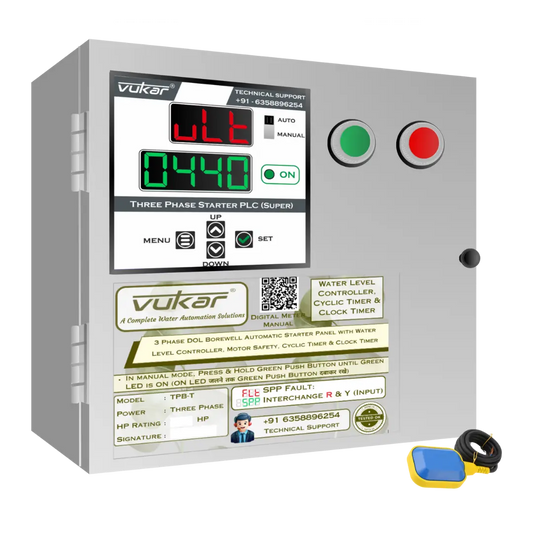
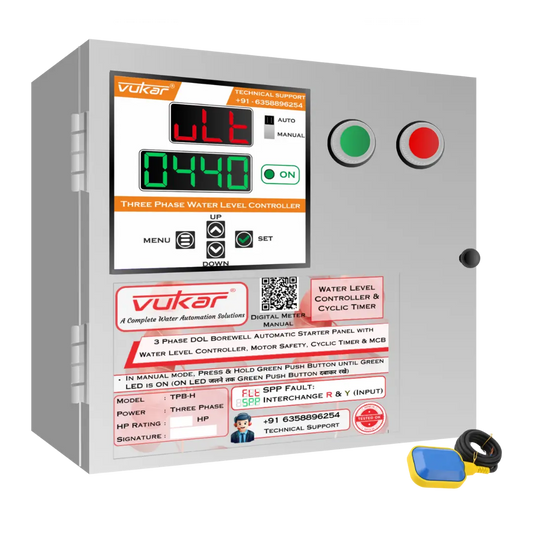
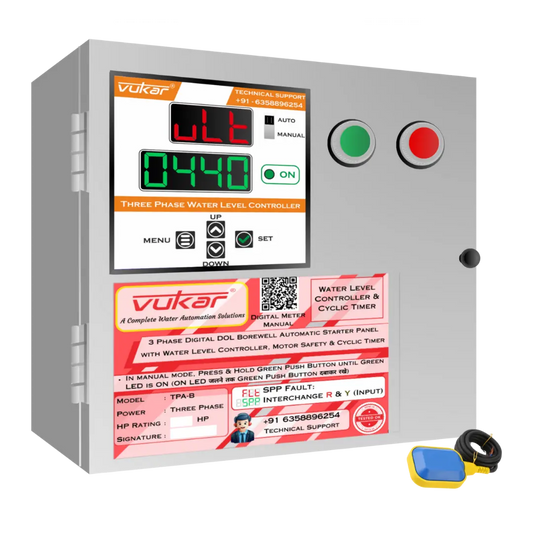
Different starters display different status information. The VUKAR catalogue lists the TPM-A as a three-phase digital DOL starter with auto switch and cyclic timer. A technician reviewing a TPM-A installation should ask which automatic mode was selected and whether the displayed event was a protection trip or a scheduled pause. Obtain the exact model documentation for the fitted panel before assigning a meaning to its indication. Compare the generator event and the starter event for the same time window.
Faults involving phase order need particular care after transfer work. If equipment has shown a different direction of rotation since a generator or transfer system was serviced, take it out of service using the site procedure and tell the responsible electrician. The electrician can examine the approved connections and establish what changed. Keep the observation separate from any assumption about the motor or panel.

What to give the generator supplier and the electrician
- Generator make, model and rated kVA, plus the transfer equipment details available in the site record.
- Motor nameplate photo and starter model, with the equipment that the motor drives.
- The event time, active supply and exact alarm shown by each device.
- Large loads already running and loads that tried to start at the same moment.
- Whether the motor stopped at transfer, failed to accelerate, or reached running speed and tripped later.
- Any recent change in the generator, transfer equipment, control settings or motor cable.
Ask the technician to record the generator-side and motor-side observations under an approved test plan. Data from separate starts can be misleading if the tank level, loading or supply has changed. If several loads run together, document that combination rather than reporting the pump as if it were alone.

Ask for two starts that can actually be compared
A useful record compares like with like. Ask the responsible technician to note whether the pump was starting against a similar water level, pressure and valve position on each supply. The same motor can have a different acceleration time when its driven load changes. Note whether the generator was already warm and whether its other loads were steady. These observations make it easier to see which part of the sequence changed when the source changed.
In a second example, the starter reports a phase-related alarm on generator power even with other loads already stable. The alarm appears before the pump reaches normal speed. The generator supplier needs that timing and the technician needs the exact relay indication. It would be premature to size a new generator from that event alone. The feeder, transfer arrangement, phase relationship and control supply still need to be examined against the actual drawing.
Where the machine has an approved history of running on both supplies, find the last dated record that shows a successful start on the generator. Compare it with any later repair, transfer change or equipment addition.
Keep the correction tied to the evidence
The next action depends on what actually happened. A generator supplier can assess whether an approved load sequence or a different starting arrangement would help when the set cannot handle the combined step load. An electrician can investigate the feeder, control supply or protection when those records point elsewhere. A process technician can account for a float or timed stop. Adjustments to protective settings must come from the equipment documentation and site requirements after the fault has been assessed.
Before the equipment is handed back, ask for a dated record of which supply was selected, which loads were present, the observed motor start and which device remained in its normal state. Keep that result with the original fault log so the next outage can be compared against a known operating condition.