
Water Pump Running but No Water? Causes and Fixes
Mohit VekariaIf your water pump is running but no water comes out, switch it off. Restore an empty water source and open the normal delivery valve before restarting. If water is available but delivery is still absent, a surface pump may need priming or suction-leak repair; a submerged pump needs water-level and flow-path checks.
Choose your pump: the fix starts here
PATH A · PUMP ABOVE THE WATER
Surface or suction-lift pump
Water reaches the pump through a suction pipe. Air leaks can interrupt this supply.
- Empty sump → refill it. Keep the suction inlet underwater during pumping.
- Lost prime → fill and vent. Priming fills the pump with water to remove air. Use its designated filling point and model-specific procedure before restarting.
- Prime drains away → repair the leak. Seal leaking suction joints; clean or replace a faulty foot valve so water stays in the line.
PATH B · PUMP UNDERWATER
Borewell or openwell submersible
This pump pushes water upward. Its inlet needs water throughout the run.
- Inlet loses water → reduce over-pumping. Measure the pumping water level. If it reaches the inlet, match water withdrawal and storage to the well's recovery.
- Water path blocked → clear it. Open the normal delivery valve. Have a stuck non-return valve or clogged intake strainer cleaned or replaced.
- Still no delivery → test pump output. Have the service crew compare flow and pressure with the model's performance curve to identify a pump fault.
Technical references: surface-pump air and valve faults; submersible-pump fault finding.

Match the symptom to the next action
| Symptom | Likely cause | Action |
|---|---|---|
| Surface pump needs filling again after standing | Water drains from the suction line; air enters | Repair the leaking joint or faulty foot valve; prime the pump again. |
| Borewell delivers water, then flow fades or stops | Pumping water level may be falling too far | Measure water-level drop and recovery; match pumping and storage to the well's yield. |
| No delivery immediately after pipe or valve work | A closed valve, reversed check valve or trapped air | Have the installer restore valve direction and position, then vent/prime the affected surface pump. |
| Motor only hums; it does not start turning | A starting fault needs a different repair path | Switch off and follow the motor humming but not starting guide. |
Air, inlet leaks, blocked valves and rotation faults appear in Grundfos' centrifugal-pump fault chart. Three-phase rotation testing is an electrician's task.
Water returns after a rest: what does that mean?
- 1 · Water flowsDelivery starts normally.
- 2 · Flow stopsThe pump is switched off.
- 3 · Water returns laterThe well may have refilled.
Solution when falling water level is confirmed: pump at a sustainable rate and store water for later use. A larger pump can empty a low-yield well faster.
Grundfos explains how over-pumping can lower well water to the pump inlet. A pumping-level measurement confirms whether this explains your symptoms.
Reduce the risk of another dry run
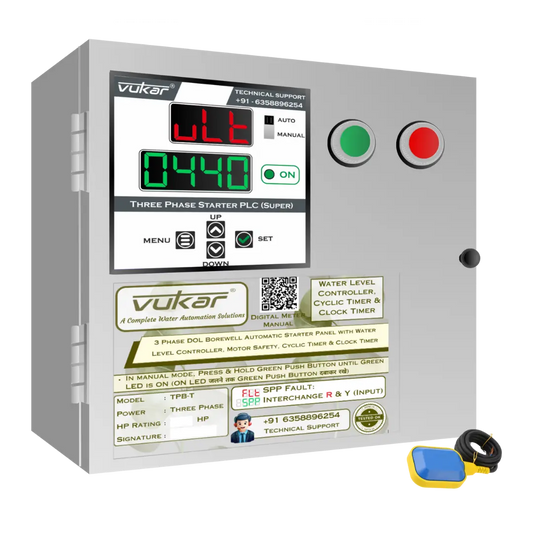
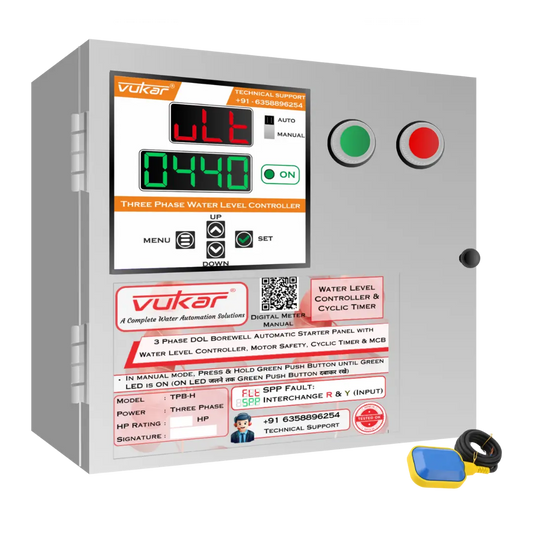
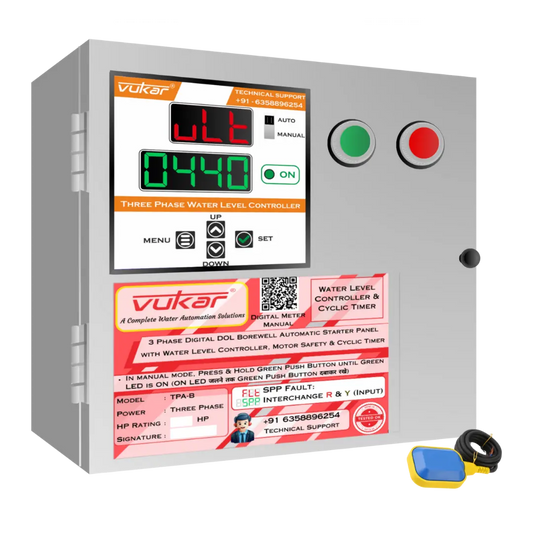
After repair, correctly configured dry-run protection can stop a compatible pump when loss-of-water conditions are detected. Read dry run versus overload to understand the two faults.
Technical references checked on 5 November 2026. Product settings and model instructions: VUKAR manuals.