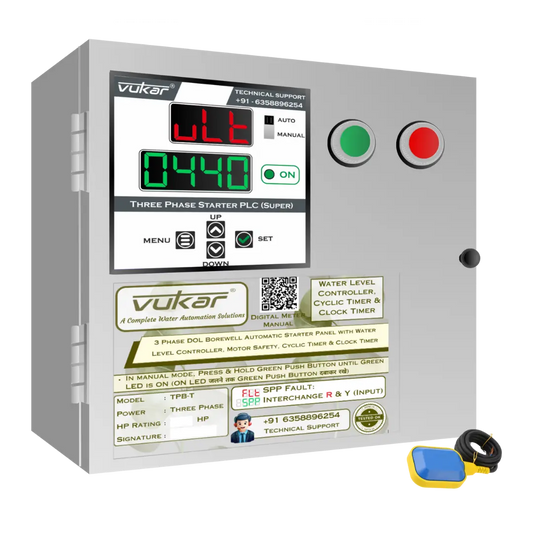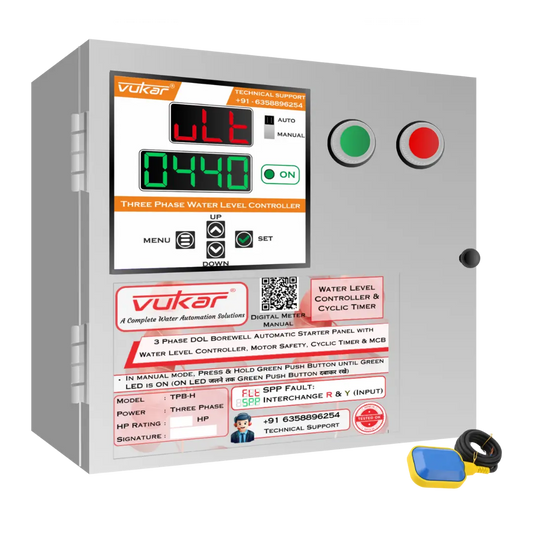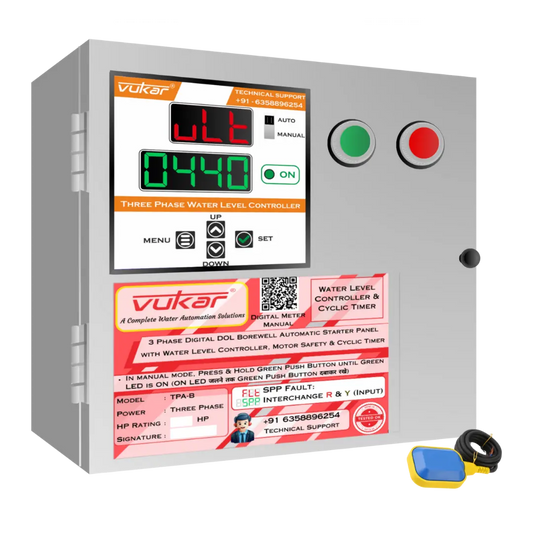

VUKAR DM-SP-CYC-96 Motor Protection Meter: Installation and Cyclic Timer Settings
Mohit VekariaFor a DM-SP-CYC-96 single phase motor protection meter setup, verify the single-phase current reading and set the run/rest cycle with the compatible starter. Have a licensed electrical contractor install the equipment and check the protection settings using the instructions for the installed revision.
DM-SP-CYC-96 installation and equipment match
Check the meter’s full model code and supply phase against the pump and starter. Gather the motor nameplate, the starter circuit diagram and information on any current sensor used in the installation. The installer should verify that the meter’s voltage and current inputs, supply and control output suit the actual circuit.
Use the single-phase motor protection meter with the compatible motor-control circuit for your installation. Give VUKAR the exact model and motor details when you request instructions. DM-SP-CYC-96 specifications and options
The meter reads electrical conditions and controls a compatible starter or contactor circuit. Have the electrician verify the current-sensing arrangement and compare indicated values with appropriate measurements under normal load. Confirm the meter’s output and the starter’s response before enabling routine automatic operation.
Have the installer verify protective earthing, isolation and circuit protection. The supply must be isolated and verified off before anyone opens an enclosure or handles conductors. The electrician should verify the single-phase supply and existing motor-control circuit before handing over automatic operation. Central Electricity Authority safety regulations

DM-SP-CYC-96 cyclic timer settings
Use the motor nameplate and the installer’s normal-load measurements to check the displayed current and protection setup. The cyclic timer defines the run and rest periods. Keep the protection thresholds on a separate line in the handover record.
Choose an initial run period from the water source and the pump maker’s operating limits. Observe whether water delivery remains steady toward the end of a normal run. Ask the installer how much rest the source and motor need, including any limit on starts per hour. Use those observations to agree on the first watched test.
Confirm the menu label, unit and save sequence in the instructions supplied for the installed unit.
Read back the saved run and rest durations with their units. The cycle begins and ends according to the installed operating mode. Watch the pump stop, time the rest from the actual stop, and stay for the next permitted start. That gives you evidence for both intervals. VUKAR timer types guide
If the motor stops before the intended time, note the display and the condition of the source. A protection stop, a stop from another control and a normal timer stop require different checks. Leave the running values in place while the installer investigates the reason for an unexpected stop.

How to use DM-SP-CYC-96 after installation
Keep the motor nameplate values, normal-load measurements and protection settings with the wiring reference. Have the installer explain how to identify a meter output, a motor running indication and a protection stop. Record them separately during the first watched test.
Before the watched test, confirm that water is available and the receiving point can accept it. Keep the enclosure closed and make sure the normal stop control is safely accessible. Agree on what counts as a successful run before you enable automatic operation.
- Confirm the saved settings. Read the active mode and relevant values with the installer. Record what should permit a start and what should end the run.
- Observe the motor response. Observe the normal run, timed stop and next permitted start. Record the display and motor behavior at each transition.
- Verify recovery behavior. Ask the installer to document what happens after power returns or a protection condition clears. A permitted automatic restart can occur without a new button press.
- Keep a handover record. Record the DM-SP-CYC-96 label, supply, motor rating, wiring reference and actual test results together.
What to record during commissioning
- Start of run
- Record the active mode, actual start time and whether water reaches the delivery point.
- End of run
- Compare the stop time with the saved interval and record whether delivery remained steady.
- Rest period
- Measure from the actual stop. Record the display and the source condition if it can be checked safely.
- Next permitted start
- Confirm the observed restart matches the saved rest duration and the operating rules for the site.
Observe each transition from a dry and safe location. If the actual response differs, record what the display, starter and pump each did. The installer can then trace whether a setting, an input, a protective condition or the motor circuit determined the outcome. VUKAR manuals and connection diagrams
Check the measurement and the control output separately
Ask the electrician to verify the display under stable pump operation. Record the motor nameplate data and the operating readings used to check the meter. Check the output indication during the same test and observe whether the starter follows the command. Those two observations help separate a measurement or setting issue from a starter circuit issue.
Keep protection settings tied to the actual motor
Have the installer document the approved current and voltage limits and the associated delays for the installed motor. The meter’s timer settings describe how a run is requested or ended. The protection values govern the response to abnormal readings. Keep both records with the diagram and revisit them if the motor, sensor or starter changes.
Hand over a normal set of readings
With the pump supplying water normally, have the installer write down the displayed values and the point in the operating sequence when they were taken. Include the active mode and the actual motor state. A technician investigating a later shutdown can compare those readings against the same part of a known working run.
Revisit the cycle when delivery changes
A pump can still run for the programmed interval while delivering less water than expected. During each inspection, note how delivery behaves near the end of the run and whether the source is ready at the next start. Review those observations with the installer before extending an interval or increasing the number of starts.
DM-SP-CYC-96 troubleshooting after an unexpected stop
Read the display and note the elapsed run time, water delivery and the condition that preceded the stop. On applicable VUKAR controllers, FOL indicates overload, FDR indicates dry run, and HIU or LOU indicates high or low voltage. If a fault returns, have the cause diagnosed before another run. VUKAR fault-code guide

How do I decide whether the rest duration is still suitable?
Watch whether water delivery stays steady through the run and whether the source has recovered before the next start. Review the values with the installer when the source conditions or pump change.
When a pump, starter, float or water source changes, give the installer the previous commissioning record. Have them recheck the expected sequence and verify the changed installation before relying on automatic operation again.
Before the system is left on automatic
Review the normal start, normal stop and recovery behavior with the person who uses the pump. Keep the approved settings near the controller or in the site records. Where another control also affects the pump, identify its role and record who should be contacted if the motor responds differently from the documented sequence.
Record an unexpected event while it is fresh
If there is an unexpected stop or a delayed start, write down the time, the visible display and what the pump was doing. Also note any recent power interruption or change to the water source. Keep those details with the equipment model so the installer can check the relevant setting and conditions.
Recommended DM-SP-CYC-96 Settings: Single-Phase Protection and Cyclic Run/Rest