
Types of MCBs by Pole, Trip Curve and Application
VUKARThe useful way to compare types of mcb is to separate the choices: pole arrangement, trip curve, rated current, breaking capacity and AC or DC suitability. These describe different properties of the same circuit breaker. A two-pole C-curve device is not an alternative category to a single-pole B-curve device; it combines a different pole arrangement with a different trip characteristic.
Start with the circuit your electrician is designing, then build the device description from those properties. This avoids a common buying mistake: choosing a familiar letter or a larger amp rating before checking what the circuit needs. For the basic name and purpose, the separate MCB meaning and working guide covers the short definition.
Use a selection map, not one list of labels
A useful specification reads like a set of answers. How many conductors must the device disconnect? Which poles include overcurrent protection? What starting current must the circuit tolerate? What fault current may be available? What voltage and current system is involved? Those questions need separate answers even when a seller compresses everything into one product title.
Schneider Electric's MCB selection FAQ asks for pole count, curve code, ampere rating, breaking capacity and operating voltage. Use that as the minimum information for a supplier enquiry. The installation still needs its own cable, earthing, protection and assembly assessment.
| Choice | What you are deciding | Information to retain |
|---|---|---|
| Pole arrangement | Which conductors open and which receive overcurrent protection | Exact pole description and diagram |
| Trip curve | Instantaneous response suited to starting behaviour | Manufacturer time-current curve |
| Rated current | Device current rating within the circuit design | Load and cable assessment |
| Breaking capacity | Fault interruption capability for the stated conditions | Fault level, voltage and applicable standard |
| AC or DC | Permitted current system and connection arrangement | Exact product rating and instructions |
An illustrative comparison of two descriptions
Assume an enquiry contains the following two descriptions. These are invented comparison entries, not named products or circuit recommendations. Both assume the same 230 V AC supply and the same stated 10 kA basis.
| Entry | Description A | Description B |
|---|---|---|
| Pole arrangement | 1P+N, phase pole protected | 2P, both poles protected |
| Current and curve | 16 A, C | 16 A, C |
| Voltage and fault rating | 230 V AC, 10 kA assumed | 230 V AC, 10 kA assumed |
The equal current and curve do not erase the protected-pole difference. The electrician must decide which arrangement the circuit requires. An actual order also needs the manufacturer reference and its documented ratings; this example deliberately supplies no product substitution approval.

Read the pole description carefully
SP, DP, TP and four-pole descriptions usually help the buyer identify single, double, triple and four-pole arrangements. They are a starting description, not a complete connection instruction. Read the device's own diagram and data sheet to see which poles switch and which poles contain an overcurrent protective element.
Do not treat 1P+N and a device with two protected poles as identical simply because both open two conductors. Schneider's Electrical Installation Guide explicitly discusses phase-and-neutral circuit breakers with only one protected pole. The required arrangement depends on the installation design. A housing width or linked handle alone does not settle that choice.
For a three-phase circuit, ask whether the supply arrangement includes a neutral and how the approved design treats it. Avoid a blanket rule that every three-phase load needs the same pole count. Neutral switching and protective-conductor treatment depend on the system. In particular, the manufacturer's neutral guidance distinguishes earthing arrangements; it is not a reason to improvise a neutral connection.
Trip curves describe a response, not the number of poles
B, C and D are familiar curve letters. The time-current characteristic shows a thermal region for sustained overcurrent and an instantaneous region at higher current. Read the curve for the exact series and standard. The letter does not mean the breaker waits a fixed number of seconds every time a fault occurs.
Published figures can differ between product families. The Schneider C60 technical data, for example, gives magnetic operating ranges of 3 to 5 times rated current for B, 5 to 10 for C and 10 to 14 for its D curve. Those are that catalogue's stated ranges, not a universal promise for every D-labelled device.
A separate ABB circuit-protection catalogue gives a D-curve AC band of 10 to 20 times rated current for its covered range. This is why a generic comparison chart cannot replace the selected product's curve. Keep the manufacturer's evidence with the choice rather than copying the broadest range from another brand.

Choose the application from its electrical behaviour
A lighting circuit, a bank of electronic drivers and a motor can have different starting behaviour even when their normal running currents look similar. Ask for the load information that explains the start. The description lighting or motor is useful context, but it does not finish the curve selection or establish that a particular breaker will ride through every start.
If an existing MCB trips when a pump starts, do not automatically change to a higher amp rating or a less sensitive curve. The electrician should distinguish starting current, a fault, cable conditions and the existing protection arrangement. Use the guide to MCB and RCCB differences to distinguish device roles, then record the observed symptom before the circuit is assessed.
A pump circuit needs more than an MCB label
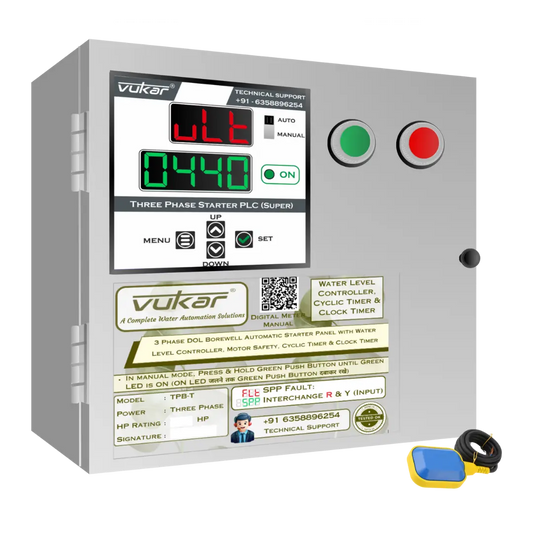
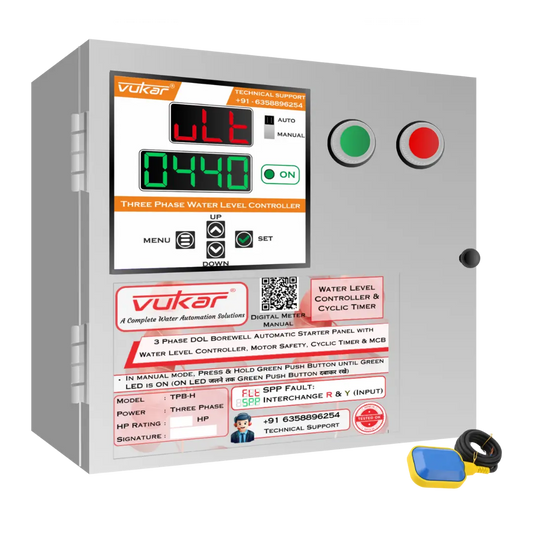
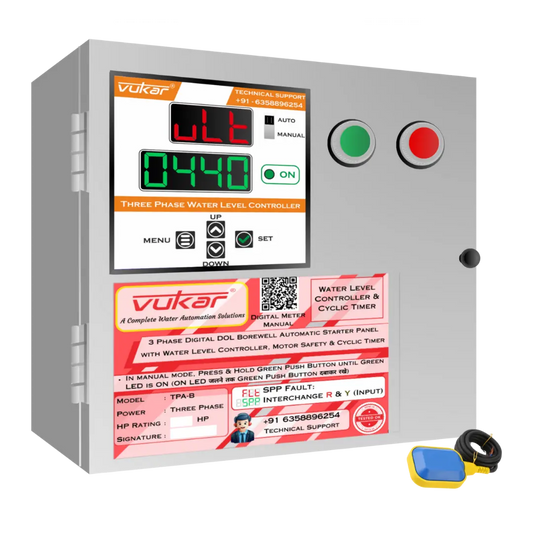
An MCB's overcurrent function is one part of a pump installation. Starting equipment, motor overload arrangements, water-related protection and isolation have their own jobs. An MCB description does not prove that every required function is included. The DOL protection selection guide explains the separate MCB, MPCB and fuse decision.
When comparing complete pump starters, identify which protections belong to the actual quoted assembly. Do not transfer every feature from a different model in the same catalogue. Keep motor phase, nameplate current and starting method with the enquiry, so the supplier can assess the product against a defined application.

Rated current and breaking capacity answer different questions
The amp rating describes the device's rated current under stated conditions. Breaking capacity concerns fault interruption at the specified voltage and standard. A breaker with a larger breaking-capacity figure does not automatically permit a larger normal load on the existing cable. Likewise, a suitable amp rating does not prove adequate fault interruption capability.
Keep the voltage and standard beside the breaking-capacity figure when comparing quotations. Similar catalogue numbers can belong to different standards or series. Ask the electrician to match the available fault level and the assembly requirements, rather than choosing from a price list that has discarded those details.
AC and DC versions are separate selection checks
Do not assume an AC-labelled MCB is suitable for a solar or battery DC circuit. Use the exact manufacturer's DC rating, permitted pole arrangement and any polarity instructions. A device can have more than one rating, but those ratings must be documented for that reference. The presence of two poles alone does not establish a DC voltage capability.
For a mixed-source site, write down which circuit you are protecting: AC distribution, an inverter's specified interface or a DC string or battery circuit. These are different locations with different requirements. Keep source transfer and circuit protection as separate design questions even when the equipment sits in the same enclosure.

Build a shortlist for one actual circuit
Use an application sheet with one row for each unknown. For a pump circuit, record the motor details and starting method. For a building branch, identify the connected equipment and the circuit record. Ask the electrician to supply the required pole and protection arrangement before the buyer compares series or suppliers.
Then narrow the shortlist using the confirmed current system and voltage. Keep only references with the required ratings and supported accessories. Compare the exact curves against starting behaviour and the protection design. The process ends with a specific catalogue reference; it should not stop at a general label such as industrial type or heavy-duty MCB.
If the proposed substitute changes one entry, put that change back to the electrician. A supplier may have the same amp rating in stock with different poles, a different curve or another standard. Stock availability does not establish an equivalent protection choice. A line-by-line comparison makes the difference visible before the item reaches the panel.
Check the delivered identification
Before installation, compare the device marking and package reference with the agreed specification. Keep the invoice and manufacturer document together. If the marking is incomplete, inconsistent with the ordered reference or unclear, obtain a satisfactory answer through the supplier before use. A photograph of another item in the same series is not the delivered device's identification record.
Turn the choice into an order your electrician can verify
Record the exact manufacturer reference, poles and protected poles, curve, amp rating, voltage, current system and breaking-capacity basis. Add the intended circuit and approved assembly. Ask the supplier to quote that reference and identify any substitute explicitly. Retain the data sheet and time-current curve with the circuit record.
Before buying, send that completed description to the responsible electrician. If one entry is still unknown, resolve it from the circuit information or manufacturer's document. A complete device description is much easier to verify than a request for a good MCB for a pump or a house.