
Motor Starter vs Contactor vs Overload Relay: What Each One Does
Mohit VekariaA motor starter is the assembly that starts and stops a motor and provides overload protection. A contactor switches the motor’s power, while an overload relay senses excessive current and signals the starter to stop the motor. If you are replacing a part inside an existing panel, the choice depends on what failed and which parts the panel already has.

- Overload current setting dial at the top
- Contactor below the dial
Motor starter vs contactor when you open a catalogue
A contactor is an electrically controlled switch. In a conventional three-phase starter, its coil closes the main contacts and connects the motor to its supply whenever the control circuit calls for a start. A small auxiliary contact can help hold the coil on after the Start button is released.
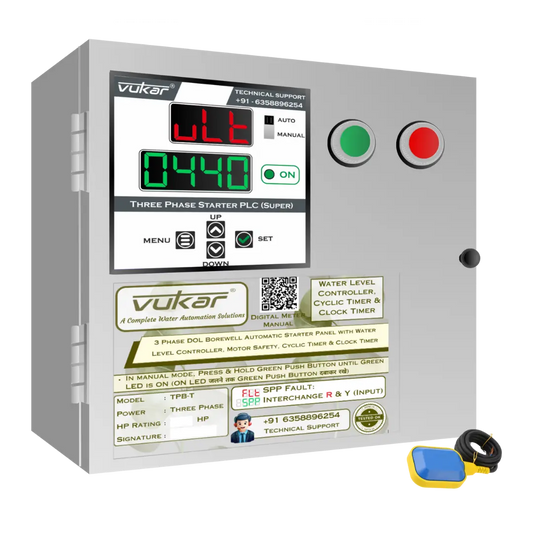
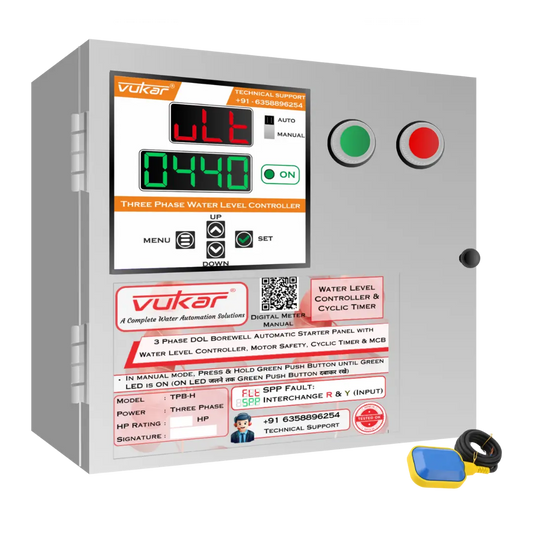
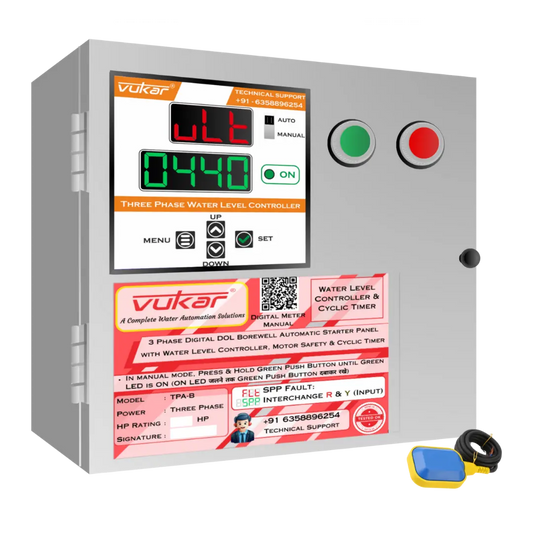
A magnetic motor starter combines a contactor with overload protection. A complete enclosed panel may also include a breaker or fuses, push buttons and a pump controller. Ask what comes with the panel. A listing for a contactor and a listing for an enclosed starter can both quote motor ratings while supplying very different hardware.
| Item | Main job | Ask for it when |
|---|---|---|
| Contactor | Connects or cuts motor power on command | An electrician has identified the contactor as the failed part |
| Overload relay | Senses sustained excess motor current and trips | The existing design needs a compatible replacement relay |
| Motor starter assembly | Switches the motor and provides overload protection | You need a start and stop assembly for a new installation |
| Separate motor protection device | Detects the faults listed for its model | An installer is adding protection to a compatible control circuit |

Dmitry G · CC BY-SA 3.0

Dmitry G · CC BY-SA 3.0
See Eaton’s photographs of a contactor and an overload relay
Contactor vs overload relay during a trip
Imagine a motor that keeps drawing too much current after it is running. In a conventional panel, the overload relay trips and opens a small contact in the control circuit, which cuts power to the contactor coil and makes the main contacts open. The motor stops.
An overload relay can allow the normal short burst of starting current because its trip time depends on the design and the amount of excess current. A suitable breaker or fuse handles short-circuit protection.
If the overload relay keeps tripping, have someone find the cause before anyone increases the setting. A setting change can mask the issue and weaken motor protection.
When the seller says “motor protection device”
Read the product description to see what it actually supplies. Depending on the model, some electronic protection devices watch conditions such as overload, phase loss or dry run. In a design with a separate contactor, the device’s output tells that contactor when to drop out. Ask whether you are buying the monitoring device alone or a complete starter with the switching hardware included.
What to send when replacing one part
Take clear photos of the installed model label and the motor nameplate. For a replacement contactor, the installer needs the coil voltage, contact rating for the motor duty and required auxiliary contacts. For an overload relay, they need its current range, the motor’s rated current and compatibility with the installed contactor and protection arrangement.
If the panel clicks but the motor does not turn, describe what happened and any fault indication. Something moved or tried to move. An electrician can trace the command and motor power path using the exact panel drawing before choosing the replacement part.