
Borewell Pump Stops Early? BOM-F RUN Timer, Overload and Dry Run
Mohit VekariaWhen a BOM-F borewell pump stops early, record elapsed run time and the panel display first. Compare the stop with the saved RUN timer, then look for changes in water delivery or a protection indication.
Start with the installed unit
Write down the model and revision from the unit label, the motor nameplate, the type of starter and the normal operating mode. Keep those details together. Two devices with similar front panels can have different menu options. The correct model guide and the current installation record are the references for any actual setting.
Use the product page to identify available functions and the installed revision’s guide for units, menu names and how the selected mode operates.
If the pump, sensor or operating mode changes, keep the previous record. Mark the date of the change and have the installer observe the revised sequence before relying on automatic operation.

Compare the stop with the saved timer
Start the stopwatch when the motor actually starts. Write down the planned duration from the installed unit’s saved setting and the elapsed time from start to stop. If the pump stopped at the expected time in timed-stop mode, that is consistent with a normal timer stop. If it stopped earlier, keep the timing and look at the visible indication and water delivery.
Note the timing in minutes and seconds where practical. A stop at the same clock time and a stop at the same elapsed time are different patterns. Also record whether the water remained steady until the stop, weakened in the final part of the run or failed to arrive at all. Give the complete observation to the installer if the reason remains unclear.
What an auto-off timer can tell you
In the timed-stop mode, RUN is the planned time from an accepted start to the automatic stop. Use the unit’s manual and the approved settings record to confirm which mode is active. If the pump finishes a normal timed run, the display and the actual elapsed time should agree with what the installer recorded for that mode. Keep that example as the normal reference.
If the stop occurs at different points on different runs, make a short log for each event. Include the saved RUN, actual elapsed time, any displayed indication and whether water had reached the outlet. A repeated protection stop needs diagnosis. The timer reading helps the electrician identify the expected stop time while they review the event that interrupted it.
Read a protection indication exactly as shown
A displayed fault identifies a protection state detected by the device. It can point the installer toward current, voltage or water-supply conditions, depending on the model. Copy the exact characters from the display or take a photo from a safe position. Use the guide for the installed revision to match the code, its meaning and any permitted recovery procedure.
Keep the enclosure closed. If the same condition returns, or the panel is damaged, unusually hot or affected by water, stop use and contact a qualified electrician. Never increase a protection limit or repeat a reset to keep a pump running. The manufacturer’s general fault guide can help you describe the category while the electrician confirms the exact indication and the actual cause.
What to observe on this model
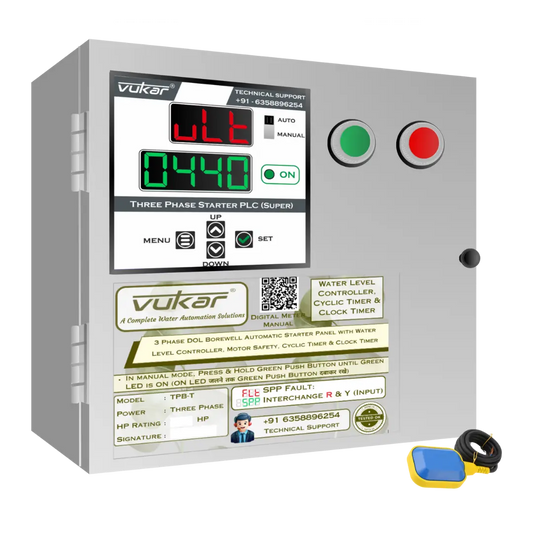
Use a four-part record for the BOM-F. Write down saved RUN, actual minutes from motor start, how the flow behaved and the exact display at the stop. The BOM-F uses an auto-off timer on the listed single-phase panel. A stop at the programmed duration without a fault indication can be normal. A stop before it, especially when the flow drops, gives the electrician a different set of observations to review.
At a stop, record whether the timer ended, whether the display changed and what happened to the water flow. If those observations do not explain the stop, send the record to the electrician before changing a setting.

Measure how much water a run actually delivers
If the flow is steady, multiply litres per minute at the delivery point by the number of minutes the pump runs. At 25 litres per minute, 10 minutes gives about 250 litres. The example assumes steady flow throughout. If the source weakens during the run, measure the volume received across the whole run before relying on that estimate.
For a receiving tank, use the space that is free at the beginning of the run. For irrigation, measure under the outlet arrangement you usually use because opening or closing outlets may affect delivery. The owner’s water delivery record and the electrician’s motor limits help determine a duration that suits the site.
Follow the command to the pump
A controller can show a request while the motor is still off. A starter switches motor power when the control circuit permits it. Observe the display, the starter’s visible response and water delivery as separate facts. These observations give the electrician a place to start without asking you to open the enclosure or touch conductors.
If the display shows that the pump should be running but there is no water, write down whether you could see or hear the motor run from a safe location. If the motor runs but delivery is absent or weak, record how long it ran and when the flow changed. Keep the display photo and the times together so the installer can compare them with the actual settings.
Use the motor and supply limits
Have the electrician match the motor’s nameplate and the controller’s sensing arrangement before setting overload, dry-run or voltage protection. A setting copied from a different pump can be unsuitable even when the pumps have the same horsepower. Ask the electrician to record the approved values, their units and which manual or measurement they used. Keep the previous approved values in the record if a setting needs to be changed.
Observe normal operation from a dry and safe place with the enclosure closed. Changes to wiring, live measurements, current sensing, protection and automatic restart belong with the installer. If a fault reappears, record the indication and stop using automatic operation until the cause has been assessed. Use the product instructions and the applicable electrical safety rules for installation and service.
What to record
| Water and source | Actual tank level or water delivery, and when it changed. |
|---|---|
| Controller | Active mode, saved value or visible indication and its unit. |
| Starter and motor | Actual start and stop, and first permitted restart where applicable. |
Make a two-line event record. In the first line write the expected result and the setting that should produce it. In the second line write the actual time, visible indication and observed water delivery. If an observation is missing, leave that field blank and tell the installer.

Prepare the installation for a watched test
Choose a time when the source has water, the receiving point has room for delivery and the operator can observe from a safe place. Agree with the installer on what counts as a successful start and stop. Use the normal operating controls. Have the installer handle any changes to the electrical circuit or protection settings.
Tell everyone working near the pump when an automatic start could occur. Keep the enclosure closed while observing the display. If the observed behavior differs from the manual or the approved record, stop the test in the normal safe way and write down what happened before any values are changed.
Change one condition between watched tests
Begin a test with the mode and relevant settings written down. Change one approved timing or operating condition at a time with the installer. Then observe the pump from the start permission through the actual stop. If two settings change together, a normal or unexpected result is harder to explain later.
Use one record for the expected result and one for what really happened. For a clock event include the active day and time. For a level event include the physical water level and display. For a cyclic stop include actual elapsed minutes. When an event repeats, compare those records before requesting another setting change.
Keep a record another operator can use
Write the model and revision, the motor details, the saved mode and the approved values at the top of the record. Under that, note actual start and stop times, any physical tank level or source condition, the display at the time and the result of the test. If the installed setup uses automatic restart, include the first permitted restart and what triggered it.

Model guide and support
Model or family reference · VUKAR Technical Support
Keep the model label, visible display and motor nameplate ready.