Two-Pump Automation: Independent Pumps, Alternation or Standby?
Mohit Vekariaशेयर करना
A dual-pump installation needs more than two motors connected to a timer. Define whether the second pump alternates with the first, takes over after a verified failure, or runs alongside it when demand increases. VUKAR's exact dual-pump solution and availability need confirmation before a model can be assigned.
Which problem are the two pumps solving?
If an operator must visit the installation to start a standby pump after the duty pump stops, service can remain interrupted during the wait. Automatic takeover may address that delay—but only if the system can identify the right takeover condition.
Other installations use alternation to share operation, or two pumps together for higher demand. These are separate functional requirements. A panel that alternates normal starts is not automatically a fault-takeover controller.
Put the desired sequence into words
The design brief should establish:
- Which pump is duty at the first demand.
- When and how the duty assignment changes.
- What condition permits or requests the second pump.
- Whether both pumps may run together.
- What happens after a fault, restored power or manual selection.
If operating hours are to be balanced, confirm how they are measured. Do not assume that alternating starts produces equal runtime.
Each motor still needs its own assessment
Record both motors' phase, voltage, rated current, starting method and permitted duty. Each needs appropriate switching and motor protection. The panel also needs an explicit arrangement for shared demand and source conditions.
Two single-pump starter panels do not automatically coordinate these decisions. A standard cyclic timer is not proof of alternation logic, flow verification or standby changeover.
A stopped pump does not always mean “start the other one”
A deliberate stop, a full destination tank and an unavailable shared water source may all require both pumps to remain off. A fault affecting the shared supply or process may not be solved by starting the standby.
Define how the design distinguishes these cases. If actual failed delivery matters, decide what verifies it rather than relying only on a motor command or contactor status.
What to request from VUKAR
Request a specific engineered proposal identifying supported sequences, individual motor protection, sensors, manual modes, fault indication and reset rules. Confirm custom availability, documentation and testing before treating it as a purchase-ready solution.
Commission normal demand, alternation if provided, each specified takeover condition and documented power recovery. Check that the sequence does not create unwanted simultaneous starts or bypass a shared interlock.
The useful benefit is a predictable response to a defined operating event. Automatic changeover cannot guarantee uninterrupted service where water, power or other shared equipment is unavailable.
One openwell pump and one borewell pump at a housing property
Mohit Vekaria supplies a housing-property example with one openwell pump and one borewell pump, both requiring automatic operation. First identify their jobs: they may supply different tanks, transfer water in stages, or serve a common destination.
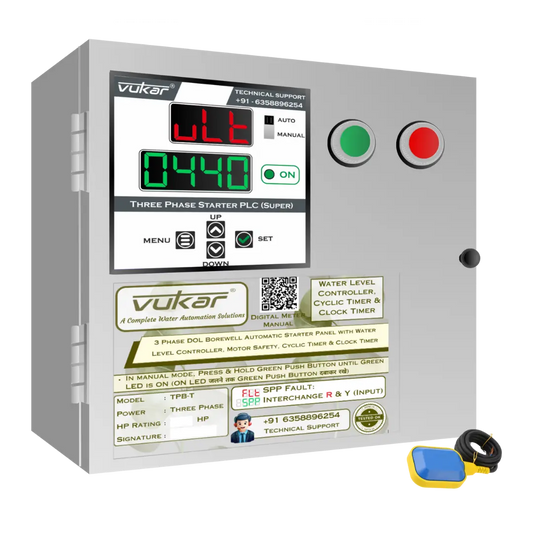
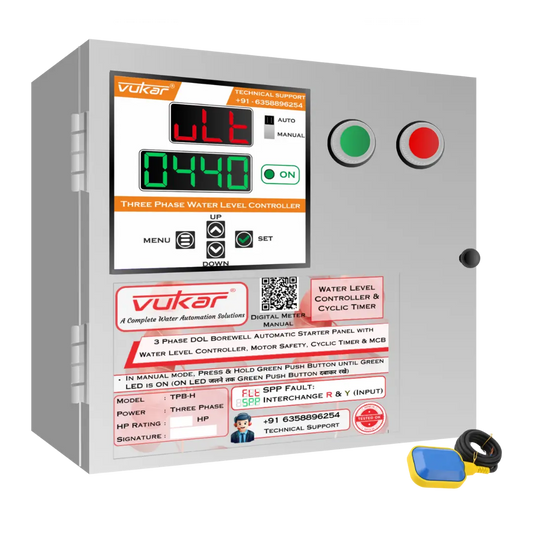
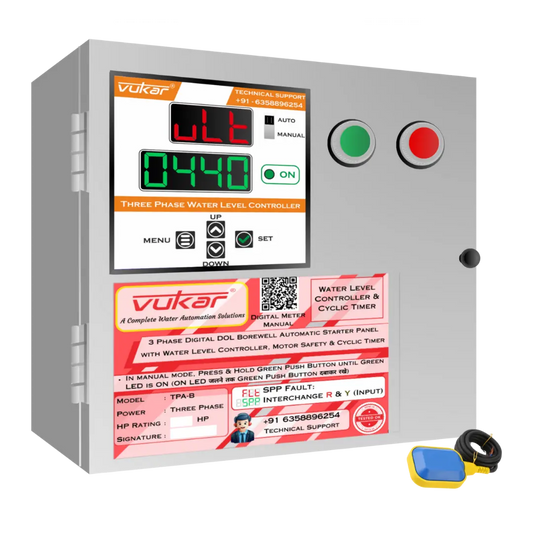
If they have separate jobs, each may need its own compatible level-control starter and local source/destination permissions. For a single-phase openwell pump, assess OPA; for a single-phase borewell pump, assess BOA. For three-phase duty, assess the relevant TPA-O/TPO or TPA-B/TPB level family. Confirm actual motor and sensor compatibility.
If the pumps share a destination or must run in sequence, define priority, simultaneous-operation permissions and common interlocks. Two automatic starter panels do not, by themselves, establish that coordination.
This case confirms a need for automatic operation of both pumps. It does not yet confirm alternation, standby takeover or the tank arrangement. Those details determine whether independent panels or a coordinated engineered system is appropriate.