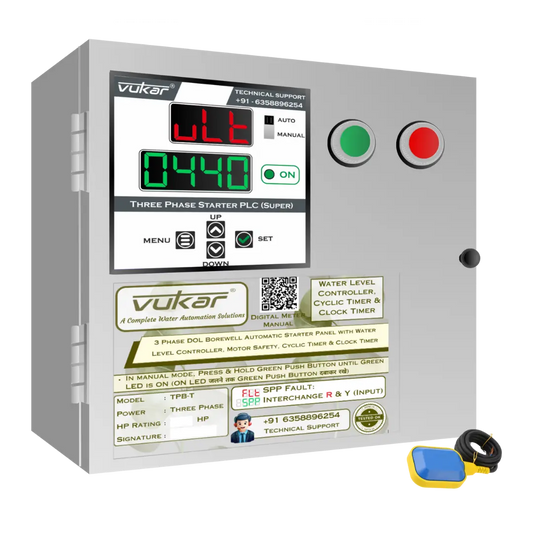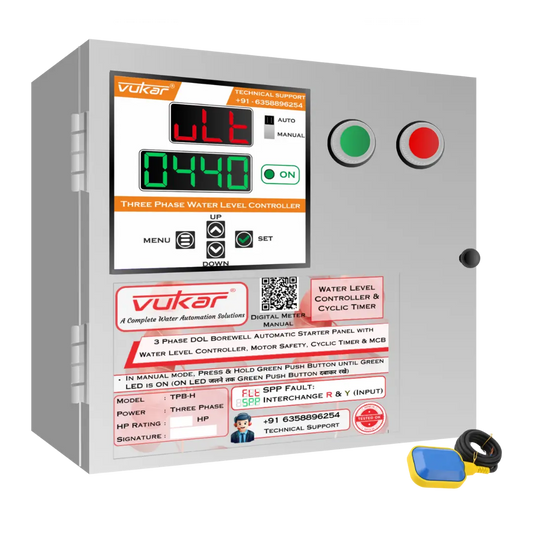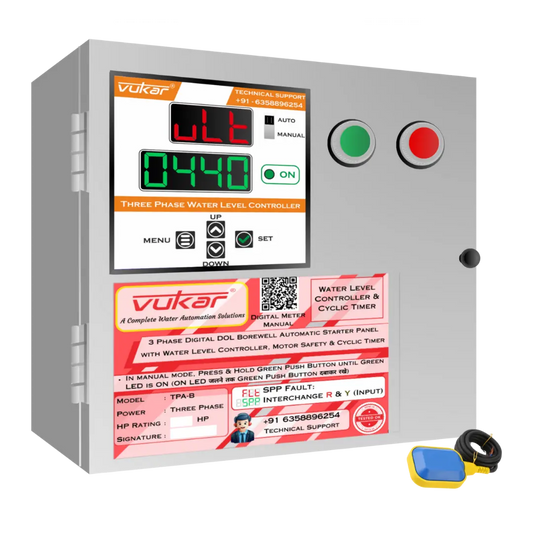

VUKAR TPO-T Three-Phase Openwell Starter: Installation and Clock Timer Settings
Mohit VekariaFor a TPO-T 3 phase openwell starter setup, set the clock schedule, then test how both floats affect permission to run during the selected hours. Have a licensed electrical contractor install the equipment and check the protection settings using the instructions for the installed revision.
TPO-T installation and equipment match
Read the motor nameplate before selecting the panel. Note the supply phase, rated voltage, horsepower (HP) and rated running current. Compare the installed panel’s model and rating with those details. The listed HP options help narrow the choice, and the electrician must check the actual supply and motor requirements.
The listed TPO-T options are rated up to 2 HP, 3 HP, 5 HP, 7.5 HP and 10 HP. Use the motor nameplate, operating current and starter requirements to confirm the correct variant. TPO-T specifications and options
A DOL starter, short for direct-on-line starter, applies the supply to the motor when the contactor closes. The contactor is the electrically operated switch in the motor circuit. Have the installer confirm the starting arrangement, protection, cable and phase sequence for this motor. Keep the supplied diagram with the panel.
Have the installer verify protective earthing, isolation and circuit protection. The supply must be isolated and verified off before anyone opens an enclosure or handles conductors. The electrician should check the phase conditions and verify normal motor operation before handing over automatic control. Central Electricity Authority safety regulations

TPO-T clock and cyclic timer settings
Use the source water condition, the receiving tank and the clock as three separate entries in the commissioning record. The intended sequence should cover a low receiving tank, an unavailable source and the end of the operating window.
Set the time and verify the displayed day or date before entering an event. Confirm whether the installed mode uses individual clock events or an allowed operating window. Enter the intended times using the controls documented for the panel revision. Read the saved entries back with the installer and record their day selection.
Confirm the menu label, unit and save sequence in the instructions supplied for the installed unit.
Record cyclic ON and OFF values separately when repeating operation is enabled. Those values describe elapsed run and rest periods. The clock describes the time of day. Ask which rule applies when a run reaches the end of an allowed window, then watch the installation at a planned boundary. VUKAR timer types guide
Check the displayed time and saved schedule after a controlled power-return test if the installer can safely perform one. Record whether the chosen mode continues, waits or requires an operator command. Use the exact revision instructions to understand the result and make it part of the handover.
Confirm how the float signal and clock are used in the selected mode. Watch what happens when the tank calls for water inside the window and when the tank reaches full. Write down how the installed system behaves when the window closes while demand is still present.

How to use TPO-T after installation
At handover, have the installer show which indication means the motor has started and which control stops it in normal operation. Ask them to identify the separate isolation point for maintenance and to record normal operating readings with the enclosure closed.
Before the watched test, confirm that water is available and the receiving point can accept it. Keep the enclosure closed and make sure the normal stop control is safely accessible. Agree on what counts as a successful run before you enable automatic operation.
- Confirm the saved settings. Read the active mode and relevant values with the installer. Record what should permit a start and what should end the run.
- Observe the motor response. Test a demand inside the permitted hours, a normal full-tank stop and the behavior at the closing time. Keep the test with the approved wiring record.
- Verify recovery behavior. Ask the installer to document what happens after power returns or a protection condition clears. A permitted automatic restart can occur without a new button press.
- Keep a handover record. Record the TPO-T label, supply, motor rating, wiring reference and actual test results together.
What to record during commissioning
- Before the window opens
- Record the displayed day, time and motor state. Check whether the selected mode is waiting for an eligible period.
- At an eligible start
- Compare the scheduled time, controller indication and actual pump start. Record any source or tank condition that affects permission.
- At a cyclic stop
- If cyclic control is active, time the actual run and rest periods. Check the display before attributing the stop to the clock.
- As the window ends
- Record the motor state and verify how the next allowed event is shown on the display.
Observe each transition from a dry and safe location. If the actual response differs, record what the display, starter and pump each did. The installer can then trace whether a setting, an input, a protective condition or the motor circuit determined the outcome. TPO-T product video
Confirm the power circuit before testing automatic control
Have the electrician record the motor nameplate, panel variant and the protection devices fitted at the site. Ask them to check the supply and running readings under a normal load. The record should identify the readings on the panel and the measurements that were used to verify them. This gives a technician a reference if a phase or current indication appears later.
Show the operator where each check belongs
At handover, review the normal stop control, the isolation point and the display. Record which settings the operator is expected to use and which protection settings were checked by the installer. If the panel and motor are replaced at different times, keep both labels in the record so the new equipment can be checked as a combination.
Keep a record of the active schedule
Write down the date of the test, the intended start and stop times, and the settings that were enabled. Have the operator read back the day selection and the normal display before leaving the site. If the schedule is later revised, keep the earlier values in the service record so the next person can see what changed.
TPO-T troubleshooting after an unexpected stop
Read the display and note the elapsed run time, water delivery and the condition that preceded the stop. On applicable VUKAR controllers, FOL indicates overload, FDR indicates dry run, and HIU or LOU indicates high or low voltage. If a fault returns, have the cause diagnosed before another run. VUKAR fault-code guide
Record any phase-related indication as displayed. The electrician should investigate the supply and phase conditions before changing timing or protection. Use the installed model’s reset procedure after the fault has been addressed.

Why did the motor stay off at the time entered?
Read the actual clock, day selection, enabled event and operating mode. Ask the installer to check any active tank, source or protection condition if the clock is correct. Record the display before you change a saved event.
When a pump, starter, float or water source changes, give the installer the previous commissioning record. Have them recheck the expected sequence and verify the changed installation before relying on automatic operation again.
Before the system is left on automatic
Review the normal start, normal stop and recovery behavior with the person who uses the pump. Keep the approved settings near the controller or in the site records. Where another control also affects the pump, identify its role and record who should be contacted if the motor responds differently from the documented sequence.
Record an unexpected event while it is fresh
If there is an unexpected stop or a delayed start, write down the time, the visible display and what the pump was doing. Also note any recent power interruption or change to the water source. Keep those details with the equipment model so the installer can check the relevant setting and conditions.
Recommended TPO-T Settings: Openwell Tank Levels, Clock and Cyclic Timer