
Why Pump Breakers Trip During Automatic Restart After an Outage
VUKARWhen a pump starter MCB trips on automatic restart, investigate both the restart sequence and the individual pump. Power returns after an outage, several pumps try to start, and a breaker opens. The outage is important context, but it does not identify the fault. The pump may have an electrical or mechanical problem, the restart command may behave differently from a manual start, or several starting loads may be arriving together on a shared supply.
For a pump starter MCB trips on automatic restart complaint, record the sequence before changing delays or protection. Keep the affected installation off after repeated trips and arrange qualified checks. A longer delay can be part of a properly assessed restart plan; it does not repair damaged insulation, a blocked pump or an unsuitable protective arrangement.
Establish what opened
Identify the protective device that operated and its location. A branch MCB, an upstream breaker, an RCCB and a motor protection function give different information. A pump stopping with a controller alarm while its MCB stays on is not the same event as an upstream breaker opening and disconnecting several panels.
Read accessible markings only through safe, closed equipment. Note the exact reference and which circuits lost supply. If access is wet, damaged or uncertain, keep away and tell the electrician. Do not open a panel merely to collect better evidence. A clear description of what remains unknown helps the service team plan the inspection.
Also distinguish a local trip from power failing again. Record whether other buildings lost supply, whether lights returned and whether the same protective handle changed position. Avoid treating every flicker during restoration as a breaker trip. The technician needs the actual sequence to separate a supply event from a local protection operation.

Automatic and manual starts differ
The installed control circuit determines what happens when power returns. Schneider Electric explains that maintained two-wire control can restart when its command remains present, whereas its described three-wire latching circuit requires another start command after interruption. These are control principles, not a wiring diagram for every pump starter or permission to alter the circuit.
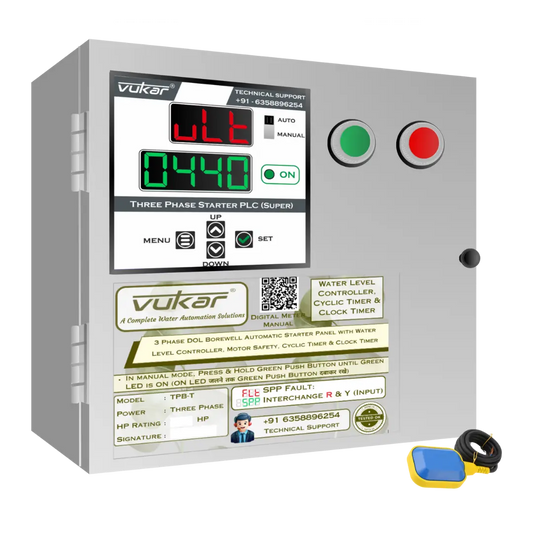
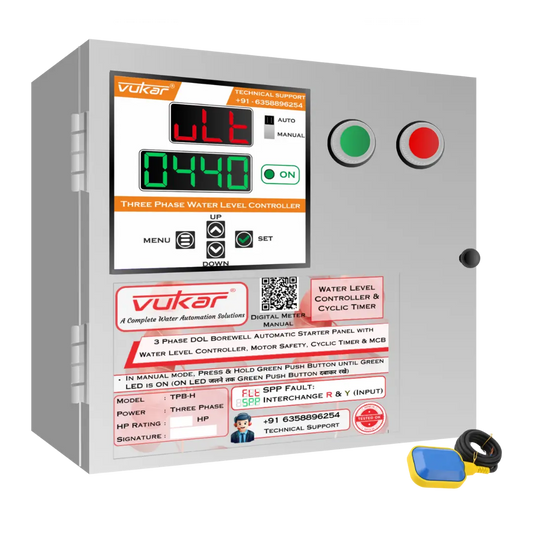
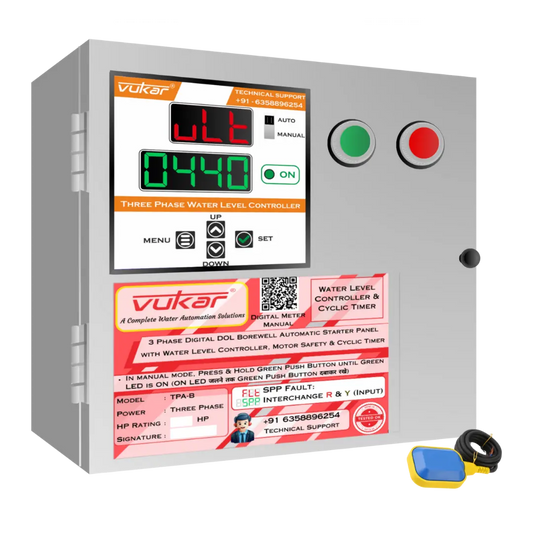
A digital controller may add its own power-on delay, protection permission or timer behaviour. Record the exact model and configuration rather than assuming all panels recover alike. A pump that restarts automatically has a foreseeable movement hazard even while power is absent. The electrician must prevent unexpected restart before servicing either the motor or its driven equipment.
If manual starting appears satisfactory but automatic restoration causes a trip, preserve that difference. The two events may occur under different supply conditions or with different loads active. It does not prove that the auto switch is defective. A technician compares the command sequence, motor behaviour and actual supply conditions before deciding what needs correction.

Record the order of events
Use a simple restoration log. It should describe what already happened, not results from deliberately repeated fault trials. Separate observed times from estimates. Where the first pump and second pump cannot be distinguished, say so rather than inventing a precise order. A clock on the wall is useful only if its time is known.
| Event | What the technician needs |
|---|---|
| Supply returned | Observed time and whether restoration stayed stable |
| First start command | Pump identity and configured delay, if known |
| Other loads started | Pumps or equipment sharing the supply |
| Protection operated | Exact device and which circuits lost power |
| After the stop | Visible alarms, sounds and any resets already attempted |
Include changes made since the last successful restart: an added pump, generator use, a replacement motor, timer changes or supply repairs. Relevant does not mean proven causal. Keep previous settings available so the technician can understand the change without relying on memory. Do not reset several timers at once and erase the comparison.
Sequence first: Record which loads tried to start together. Do not choose a larger MCB or bypass a protection output simply because the installation starts after an outage. The cause must be established before the protective arrangement is changed.
Why coincident starts matter
Motor starting places a different demand on the supply from steady operation. Several motors starting together can create a more demanding event than those same motors already running. Schneider Electric's motor-starting guidance explains how starting demand and voltage drop affect an installation. Its large-motor examples do not provide a universal current multiplier or delay for a small farm pump.
The electrician considers the shared supply, cable routes, motor data and starting methods. A voltage reading taken later, with the pumps stopped, cannot describe the full restoration event. Where justified, professional recording can relate the supply and current behaviour to the start commands. Do not present a guessed graph as a measured motor-start trace.
One pump starting alone and several pumps starting together are useful comparison conditions for a planned investigation. The technician decides whether and how a controlled test can be done safely. An owner should not repeatedly restore a tripping installation to create the comparison. Existing logs and configuration records can guide the initial assessment without more fault attempts.

Check the individual pump too
A shared restart problem can coexist with a fault in one pump. A blocked mechanism, damaged cable, motor fault or unsuitable single-phase capacitor circuit still requires its own diagnosis. If the same pump trips during an ordinary start, report that separately. Do not let the dramatic outage story hide a symptom that also occurs at other times.
Record whether the motor remained silent, hummed, began turning or reached normal water delivery before stopping. Those observations guide different checks; none alone identifies a component. Do not keep a stalled or humming motor energized while waiting to see whether it recovers. Safe isolation and the manufacturer's service instructions are the appropriate next steps.
Protective-device selection must also fit the circuit. An MCB's rating and characteristic need coordination with the conductor and starting requirements, alongside the relevant fault conditions. Repeated trips do not by themselves justify increasing its rating. Ask the electrician to explain the evidence behind any proposed protective-device change and retain the selection record.
Build a verified restart plan
Where the assessment supports sequencing, assign each pump an identified place in the plan and document the actual configured delays. There is no single waiting interval that suits every installation. The chosen sequence must be checked against the motors, supply and control behaviour, including the time needed for one pump's starting event to settle before another is permitted.
Distinguish a power-return delay from an operating schedule or a cyclic rest period. Changing one may not change the other. Use the correct model manual and record the final configuration. A product title mentioning an auto switch does not establish an installed delay, a particular MCB curve or the condition of the upstream circuit.
For confirmed VUKAR DEV-K3, DEV-K4 and DEV-P2 timer behaviour, power-return timing depends on the memory setting: mem Yes continues remaining run or rest time, while mem No begins again. These models use the DM-Universal-V1 instructions. Do not apply that rule automatically to another controller or confuse resumed run time with a verified multi-pump sequence.
Users must also avoid coincident or overlapping timer events. No verified rule here establishes that ON or OFF always wins when commands overlap. Schedule edits on the confirmed models apply immediately, and weekday permission overrides the time window. Have the responsible operator review the complete plan instead of changing one number while ignoring the other events.
Consider three pumps sharing a supply at a farm. The owner reports that all three cabinets show a start request after restoration and the upstream breaker opens. A useful service record labels the pumps A, B and C and preserves each saved delay. It does not assume that three identical displays mean three identical motor loads. The technician can then investigate the common supply and each pump, and decide whether a revised sequence is justified. This is a planning example, not a recorded fault test or a suggested delay table.

Verify the result and hand it over
The service report should identify the cause found, corrective work, final settings and verification performed. If safe testing did not reproduce the original supply conditions, record that limit. A normal start during a quiet afternoon does not prove that the installation has been observed under the same conditions as the original restoration event.
Give every responsible operator the final sequence and the conditions requiring the pumps to remain off. Keep the log if the electrician requests further safe observations. Use the MCB and RCCB diagnosis wizard for symptom organization and the product manual page for model instructions. A documented restart plan should replace repeated resetting, with the existing protection working as intended.
Sources: Schneider Electric: two-wire and three-wire restart behaviour; Schneider Electric: motor-starting constraints; Schneider Electric: circuit-breaker selection; VUKAR manuals and manufacturer clarifications for DEV-K3/K4/P2 timing.