Motor Protection Device: Functions, Limits and Selection
Mohit VekariaShare
A correctly selected starter panel can disconnect a pump for the faults it is designed and configured to detect. It cannot guarantee uninterrupted water supply, prevent every motor failure or replace maintenance.

Check the whole protection system
A motor protection relay usually sends a trip signal through the control circuit. It is not automatically a replacement for the contactor, circuit breaker, safe isolation or the whole starter panel. Have an electrician assess the complete coordinated installation before replacing any component.
The loudest sound in a factory is silence.
The sudden, deafening silence when the main motor stops. I know that feeling of your heart dropping into your stomach. As a maintenance head, your job is not just to fix things. It is to prevent that silence from ever happening. You are searching for a motor protection device, not as a part, but as a promise of uptime.
The Nightmare of an Unscheduled Shutdown
A failed motor is not a line item on a maintenance report. It is a full-blown crisis. It is the sound of machinery grinding to a halt. It is the sight of idle workers and wasted raw materials.
It is a direct hit to the company bottom line. In fact, it is a direct reflection on your department performance. The financial and professional cost of that silence is immense.
Protection functions and their limits
For a three-phase-powered device or panel, confirm the documented phase-loss, phase-sequence and phase-unbalance functions and their operating limits. Do not assume that every digital relay includes them. Commission the trip and recovery behaviour with the actual motor and supply.
Check the actual display, fault codes and history features provided by the selected model. A fault indication identifies a detected condition, not necessarily its root cause. Logging capacity and response times must come from the manual, not from the word “digital”.
Compare exact models and documented functions
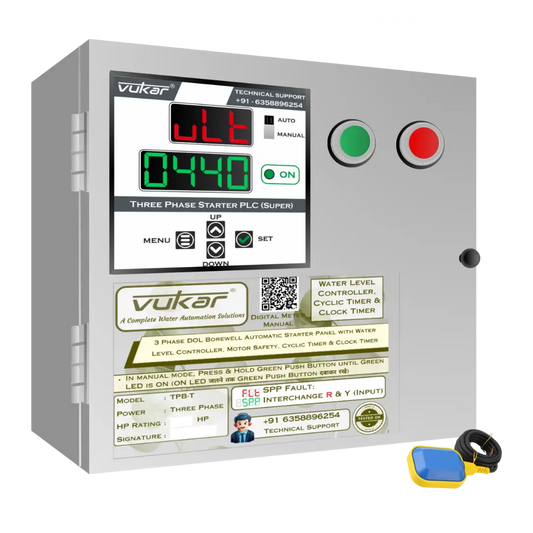
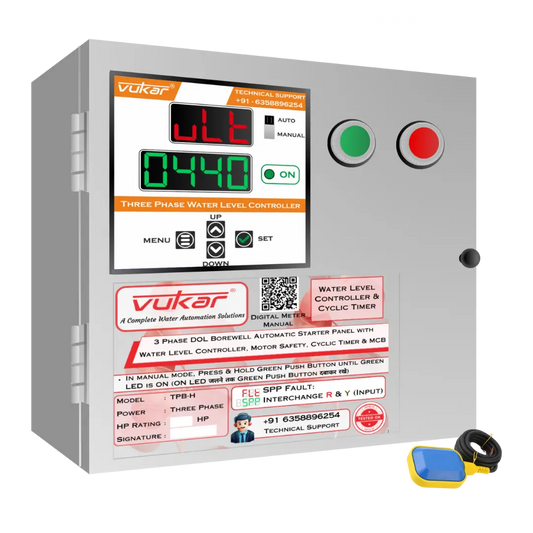
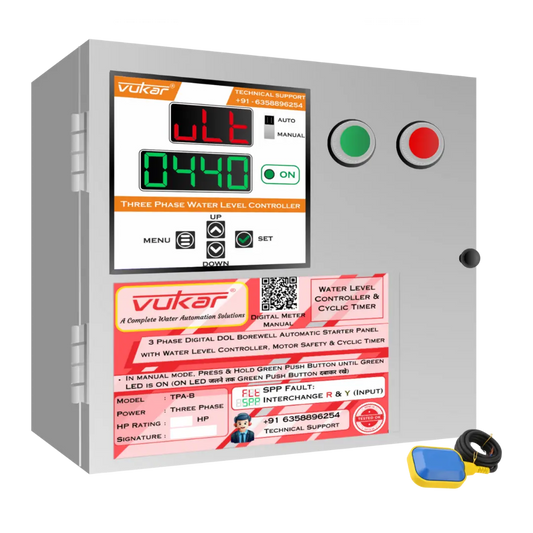
For each shortlisted model, record: motor-duty and current ratings; supported overload, voltage and phase functions; dry-run sensing method; timer and restart behaviour; display indications; enclosure requirements; supplied accessories; written warranty; and the dated total price. Mark absent or undocumented functions explicitly. Digital and mechanical labels alone do not establish the fitted protections or reliability.
Selection and commissioning checks
Use this checklist to specify a truly professional solution that you can justify to management.
Check the whole protection system
Before ordering, record the motor nameplate phase, voltage, HP/kW and rated current. Match the panel, contactor duty, overload adjustment range and enclosure to that motor and its installation. HP alone is not enough to confirm compatibility.
Verify Full 3-Phase Protection
For a three-phase-powered device or panel, confirm the documented phase-loss, phase-sequence and phase-unbalance functions and their operating limits. Do not assume that every digital relay includes them. Commission the trip and recovery behaviour with the actual motor and supply.
Insist on Smart Dry Run Protection
Dry-run detection may use a source-level input or a change in motor load, depending on the model. Current sensing is not a direct measurement of water level. Confirm the sensing method, settings, delay and restart sequence; a timer does not prove the borewell has recovered.
Require a Digital Display with Fault Logging
Check the actual display, fault codes and history features provided by the selected model. A fault indication identifies a detected condition, not necessarily its root cause. Logging capacity and response times must come from the manual, not from the word “digital”.
Ask About Auto-Restart Functionality
Before enabling Auto mode, confirm what happens after power returns, a timer expires or a fault clears. Assess unattended-start hazards and the actual water-source conditions. Automatic starting does not remove inspection duties, and no universal restart delay suits every borewell.
three phase motor protection devices · digital panel meters with protection built in
Frequently Asked Questions (FAQ)
Is a single phase preventer enough for my motor?
A correctly selected starter panel can disconnect a pump for the faults it is designed and configured to detect. It cannot guarantee uninterrupted water supply, prevent every motor failure or replace maintenance.
How does this provide dry run protection without extra sensors?
Dry-run detection may use a source-level input or a change in motor load, depending on the model. Current sensing is not a direct measurement of water level. Confirm the sensing method, settings, delay and restart sequence; a timer does not prove the borewell has recovered.
Why is a digital 3 phase motor protection relay better?
Compare documented functions of identified models, not unsupported brand rankings or anonymous testimonials. Ask for the current manual, written warranty, itemized quote and local support details. Prices, included sensors, ratings and warranty terms vary by exact variant and seller.
What is the main benefit of a digital motor protection device?
A protection trip may reduce damage associated with a detected fault, but repair savings and payback are not guaranteed. Compare the purchase and installation cost with the actual risks, maintenance needs and documented capabilities; do not assume zero future repairs.
Can this device replace my old starter panel?
A motor protection relay usually sends a trip signal through the control circuit. It is not automatically a replacement for the contactor, circuit breaker, safe isolation or the whole starter panel. Have an electrician assess the complete coordinated installation before replacing any component.
Before you order
Choose from the documented model and installation requirements, then arrange qualified commissioning and ongoing checks. Confirm the warranty and support route before purchase. Automatic operation is a convenience, not a guarantee against faults or a substitute for maintenance.