
When a Float Switch Can Control a Pump and When It Needs a Starter
VUKARA float switch for water pump control can switch a motor directly only when the exact switch has a documented motor-load rating that covers the pump's voltage, phase, running current and starting duty, with the required protection in place. Otherwise, select a suitable control switch and a correctly designed starter or controller arrangement. A large ampere number alone does not settle the choice. The question is what kind of electrical load that number describes.
Start with the pump nameplate and the float's exact model identification. Ask the supplier for the relevant instructions, not just a photograph of the box. Two floats that look similar may be intended for quite different duties. This buying guide compares those duties; it does not provide a universal wiring diagram.

First decide what the float will switch
A direct pump switch carries the motor current through its contacts. A control float supplies a signal to a compatible controller or starter circuit, while the motor-switching equipment handles the pump load. Both arrangements can respond to a changing water level, but their electrical requirements are different.
For a documented distinction, SJE describes SignalMaster as a control switch for pump control panels and alarms. Its listed 5 A electrical rating is not permission to connect any 5 A motor directly. Read the intended application with the rating. The presence of a contact rating does not change a control switch into a motor-rated pump switch.
Select the duty before comparing amperes. Ask whether the float will carry the motor load, switch a starter coil, or connect to a controller input. Each answer needs its own compatibility check. Do not buy a replacement by cable colour or housing shape; identify the electrical function and the exact model.

Read running current and starting current separately
A motor's running demand and starting demand are different conditions. A switch selected only from the normal operating current can miss the manufacturer's starting-duty limit. Collect the motor data needed for the comparison, including starting information where required, and let the electrician check it against the selected switch's documentation.
The SJE PumpMaster installation instructions provide a useful exact example. For the PumpMaster at 230 VAC, 50/60 Hz, single phase, they list maximum pump running current of 13 A, maximum starting current of 85 A and recommended pump size of 1 HP or less. They also require a pump with integral thermal overload protection. These conditions belong together.
That example does not approve every 1 HP pump, every 13 A load, a three-phase motor or another float model. Do not transfer the limits from PumpMaster to PumpMaster Plus, or the other way round. The product family's name is not a substitute for the selected variant's instructions. For an Indian installation, confirm the supplied version, applicable approvals and installation requirements with the supplier.
Why a resistive rating is not enough
A number quoted for a resistive load does not establish motor-switching suitability. Nor can a controller's potential-free relay rating be converted into an allowed pump horsepower without the manufacturer's motor-duty information. Avoid rules such as divide watts by voltage and buy the nearest larger relay. That calculation does not establish contact-making and breaking capability for the actual motor.
If a seller gives only an ampere figure, ask for its voltage, load type and starting-duty conditions. An answer saying suitable for all pumps is not a technical selection record. Request the model's motor-rating table or a written recommendation for the named pump and protection arrangement. Keep it with the purchase documents.
A starter is not merely a way to add a larger number. It introduces a separate control circuit and motor-switching equipment that must be selected together. The float's contacts must suit that control load too. A motor-rated switch is not automatically a good choice for a very small electronic input; check the manufacturer's intended duty in both directions.
Compare the two arrangements fairly
| Selection point | Direct motor-rated float | Float with suitable starter or controller |
|---|---|---|
| Float contact duty | Actual motor running and starting duty | Exact control-input or coil duty |
| Motor switching | Through the float contacts within its documented limits | Through the selected motor-switching equipment |
| Protection | Required motor and circuit protection still needed | Verify the protections actually included and configured |
| Replacement decision | Match exact motor rating and application | Match both the input requirements and the motor arrangement |
A comparison should include installation and protection, not just the float's purchase price. Ask what equipment will remain when a float is replaced and which part actually switches the motor. This makes future maintenance easier: the next person can identify whether they are replacing a sensor, a control contact or a motor-load switch.

A starter still needs the right float
For a float switch with contactor control, obtain the coil voltage and relevant switching duty. If the float goes to a controller input instead, obtain that input's electrical requirements. Do not assume every control circuit uses the same voltage or that every dry-contact input accepts every switch. Have the electrician check the exact combination.
The SignalMaster product information includes a minimum-load caution as well as its upper electrical rating. This is a useful reminder that checking only a maximum can miss the lower end of an application. The proper answer is a documented match between the input and switch, not the biggest contact rating available.
Keep the wiring explanation specific to the chosen equipment. The existing tank-filling and tank-emptying connection guide explains the difference in operating intent. It does not replace the selected float and starter instructions. A cable's unused conductor and the direction of operation must be dealt with according to those instructions.
Check the water-side job as well
Electrical suitability is only one part of selecting a water pump float switch. The float must move freely, fit the tank and provide the required filling or emptying action. Confirm the mounting arrangement and the permitted cable tether. A switch with the right electrical duty can still give an unsuitable operating range if its movement is obstructed.
Tell the supplier whether the float is in the receiving tank or the water source. A tank-filling request and a low-source interlock have different jobs. Where both tanks matter, describe both rather than expecting one float to report every condition. Use the float-switch sensor selection guide to prepare the tank and mounting details.
Avoid using cable length as the operating-level specification. The cable must reach its termination, while the free tether near the float determines its permitted movement within the model's mounting instructions. Check clearances throughout the expected motion. A long cable does not make the housing suitable for any liquid, depth or environment.
When to consider a complete wired controller
If the project needs coordination between tanks, timers or named protection functions, compare a complete suitable controller arrangement with a float-only purchase. That comparison should identify what the controller supplies and what the existing starter must still do. Do not assume adding a controller removes the need for motor-load selection.
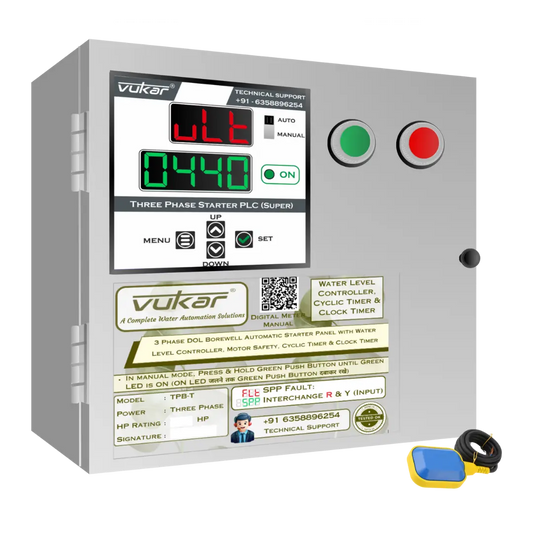
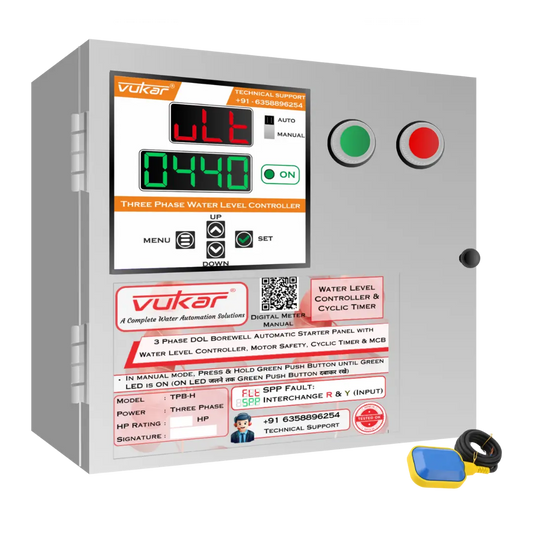
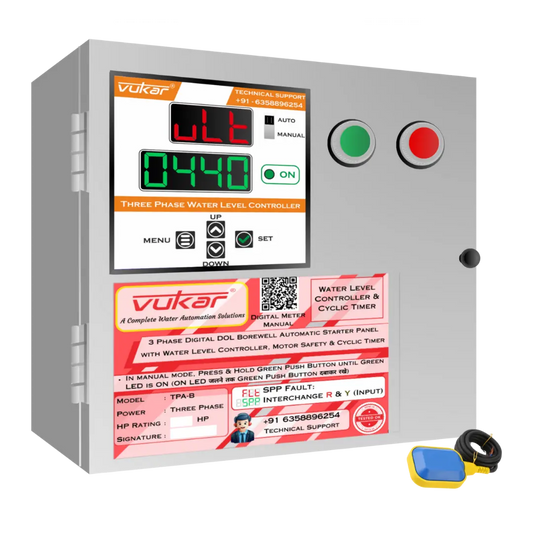
The current VUKAR automatic water level controller range offers a genuine wired alternative, with model selection by phase and single or double float-switch arrangement. It is relevant when choosing the control architecture rather than buying an unspecified direct-motor float. Confirm the exact model, pump application, included sensors and connection requirements before ordering.
The product card is an enquiry starting point, not a declaration that its output directly carries your motor current. Send the supplier the nameplate and existing starter details. Ask for a complete proposal stating which device senses the level, which device switches the motor and where the required protection is provided.

Leave an electrical selection record
Before payment, collect the float model, motor nameplate, relevant motor-duty or control-duty documentation, and the electrician's proposed arrangement. Include mounting requirements and the intended filling or emptying action. A short clear record is more useful than a list of marketing features without conditions.
During commissioning, ask for normal level changes and the agreed stop condition to be demonstrated. Record what was observed without calling it a certification of every rating. A brief successful run cannot establish long-term contact suitability or replace the manufacturer's selection limits. Keep the instructions available for the next service visit.
If you already have a float, begin by reading its exact identification and asking what it switches today. Then compare that documented duty with the actual pump or control circuit. Approve direct motor switching only after all required conditions match; otherwise, have the right starter or controller arrangement specified before the purchase is final.