
6 kA vs 10 kA MCBs and How to Choose Breaking Capacity
VUKARChoose the breaking capacity of MCB protection by comparing its declared short-circuit rating with the prospective fault current at the installation point, under the correct voltage and standard. A 6 kA MCB is not automatically adequate for every home, and a 10 kA MCB is not automatically a complete upgrade. The exact device, circuit and any verified upstream backup arrangement matter. Keep the kA rating separate from the normal ampere rating and trip curve. Ask the qualified electrical professional to establish the fault-current requirement before you compare prices or replace a device.
What the kA number is describing
One kiloampere is one thousand amperes, so 6 kA and 10 kA represent 6,000 A and 10,000 A respectively. In this context, the figure concerns short-circuit interruption under stated test conditions. It does not tell you the normal appliance load, the current a cable may safely carry or the point at which every trip begins. A device can have a 16 A normal-current rating and a separate kA breaking rating without contradiction. Those quantities answer different questions. Compare each with the corresponding installation requirement instead of choosing the product with the largest-looking number.
Schneider Electric’s circuit-breaker characteristics guide distinguishes operational voltage, rated current and short-circuit breaking capacity. That distinction is useful when a quotation simply says “10 kA breaker.” Request the complete reference, pole arrangement, voltage, current rating, characteristic and standard. A photo of a similar case or a short shopping title does not provide that information reliably. For a replacement, retain the approved circuit specification and board identity as well. The question is whether the exact proposed device is suitable at its location, not whether the front looks familiar.

Icn, Icu and Ics are not interchangeable labels
For household and similar applications under IEC/EN 60898-1, the rated short-circuit capacity is identified as Icn. Under IEC/EN 60947-2, Icu identifies ultimate short-circuit breaking capacity, while Ics identifies service short-circuit breaking capacity. Their test sequences and conditions differ. ABB’s explanation of short-circuit values describes why designers must interpret the quantity and standard together. Do not compare a 6 kA Icn statement with a 10 kA Icu statement as though the number alone establishes a directly equivalent upgrade. Read the device’s declaration for the actual application.
A published Schneider iC60N catalogue example illustrates the distinction. It lists Icn of 6,000 A at 230 V phase-to-neutral under IEC/EN 60898-1. Its IEC/EN 60947-2 table lists Icu of 10 kA for the 6 A to 63 A range at 220 V to 240 V phase-to-neutral. The family can therefore have different declared figures under different standards. This is a technical-reading example, not a claim about current stock or a recommendation for a particular obsolete or current SKU. Follow the exact device documentation used by the installer.

Compare the rating at the correct voltage
Breaking capacity belongs with its stated voltage and supply arrangement. A figure quoted at one voltage cannot simply be transferred to a different system. Read AC or DC, frequency where applicable, pole arrangement and the relevant voltage row. For a multi-pole device, also read any individual-pole or special-system conditions that apply. Avoid treating two physically similar breakers as equivalent while one quotation uses a household Icn figure and the other uses an industrial Icu figure. A complete specification makes the comparison meaningful and exposes a missing condition before the purchase is made.
The installation point matters too. The available fault current depends on the supply and the impedance of the path to that point. A board near a transformer can have different conditions from a distant final circuit. Do not infer the requirement from the number of rooms, the motor HP or the breaker currently installed. Have the professional establish the prospective fault current by the appropriate assessment for the installation. Record where the value applies, which supply condition it represents and the voltage and date associated with the record. A number with no location is a weak selection basis.
Illustrative 230 V comparisons with matching Icn conditions
The following examples are assumed teaching cases, not site measurements. Compare two hypothetical AC devices, each declared at 230 V under IEC/EN 60898-1: one has Icn 6 kA and the other Icn 10 kA. Assume the assessment has established the prospective short-circuit current at the same installation point and that no backup-protection claim is being used. The table checks only the breaking-capacity comparison. It does not approve the complete circuit, conductor protection, trip characteristic, enclosure, product compatibility or local installation requirements.
| Assumed prospective current | 6 kA Icn device | 10 kA Icn device |
|---|---|---|
| 4 kA at 230 V AC | Exceeds this assumed current for this comparison | Exceeds this assumed current for this comparison |
| 8 kA at 230 V AC | Below this assumed current; inadequate alone | Exceeds this assumed current for this comparison |
| 12 kA at 230 V AC | Below this assumed current; inadequate alone | Below this assumed current; inadequate alone |
The useful lesson is the boundary between an arithmetic comparison and an installation approval. In the 8 kA example, the 10 kA Icn device meets this single comparison while the 6 kA Icn device does not meet it alone. That still leaves the other selection requirements to be satisfied. In the 12 kA example, neither figure is adequate alone. Do not turn “10 kA is larger” into a universal answer. Use the manufacturer selection guide for the requirement to match the installation’s prospective current or a properly coordinated associated protective arrangement.

Upstream backup requires evidence for the combination
A lower-rated downstream device may be used in a manufacturer-supported backup or cascading arrangement when the specified association satisfies the required conditions. That is an engineering selection supported by coordination evidence, not permission to assume that any upstream breaker will protect any downstream breaker. Record both exact references, the voltage, applicable fault-current limit and the manufacturer’s table or documented approval. The installation’s cables, busbars and other associated components also need to remain within their permitted stresses. A vague statement that “the main breaker is bigger” is not that evidence.
Do not add kA ratings in series. A 6 kA device and a 10 kA device do not automatically create a 16 kA combination. Also separate backup protection from selectivity: reducing the stress on a downstream device is not the same question as ensuring only the intended device trips. Use the exact manufacturer association and its conditions. If the product references or supply arrangement change, revisit that evidence. Where no verified association is available, assess the device on its own declared capability and select a suitable arrangement with the responsible electrical professional.

What changes should trigger a fresh check
A supply alteration, transformer change, generator connection, new distribution board or substantial circuit change can make an old selection record incomplete. Have the installation assessed for the relevant operating conditions rather than assuming the previous fault-current value still applies. A generator’s different fault behavior also requires a protection assessment; do not assume that a lower available current makes every aspect of protection easier. Keep the supply source and configuration in the record. That helps the next professional understand which condition was considered when the breaker and its associated protection were chosen.
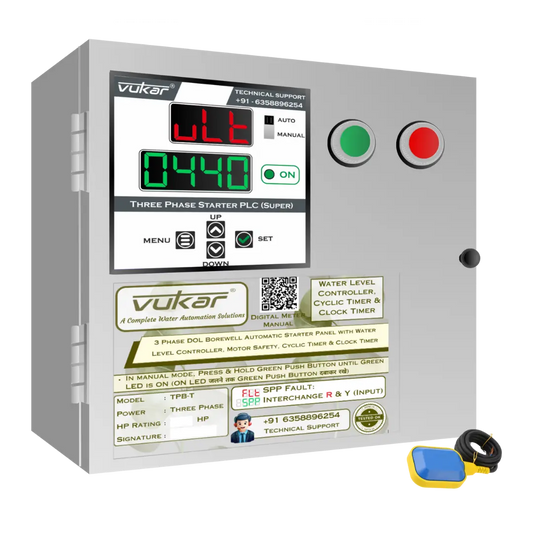
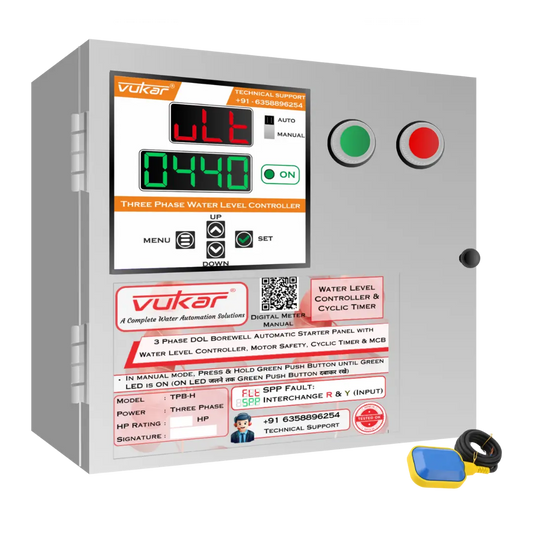
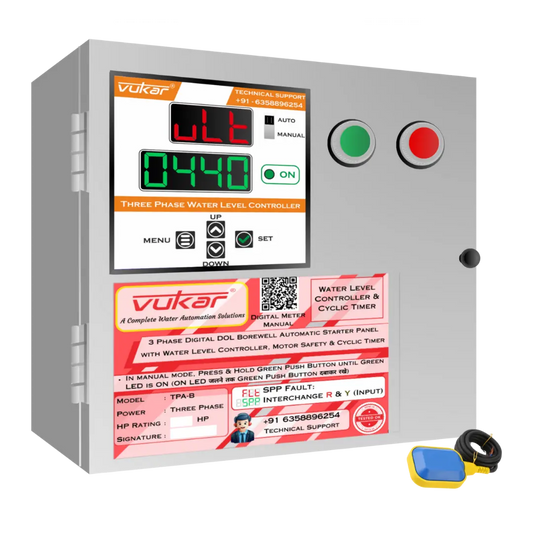
For a pump-panel purchase, compare the complete assembly as well as the individual protective device. An included MCB does not establish the fault rating of every panel or approve an arbitrary site supply. Ask for the exact protective-device reference and the assembly information relevant to the installation. The MCB guide explains the basic device role, while the RCCB guide distinguishes residual-current protection. Do not treat a kA number as evidence that earth-leakage protection, isolation and motor-control functions are all included or correctly coordinated.
A useful handover file pairs the assessment with the selected device rather than storing them as unrelated photographs. Name the installation point, supply source, voltage and assessment reference on the same sheet as the breaker reference. Record whether the selection uses the device alone or a documented backup association. Keep the manufacturer table version if an association is used. When another person later changes a component, that record shows which assumption needs review. A missing value should remain a missing value until the qualified professional resolves it; do not fill it with a typical figure found online.
Send a decision-ready enquiry
Send the seller the approved device specification, required quantity and board compatibility details after the technical requirement has been established. Keep the prospective-current assessment and any coordination evidence with the installer’s record. Request the exact product reference, current documentation and an itemized quotation. If an alternative is offered, compare its full declared ratings before accepting a price saving. Your next step is to identify the installation point and obtain its documented requirement from the qualified electrical professional. That turns “6 kA or 10 kA?” into a specific selection decision rather than a guess based on a shopping label.