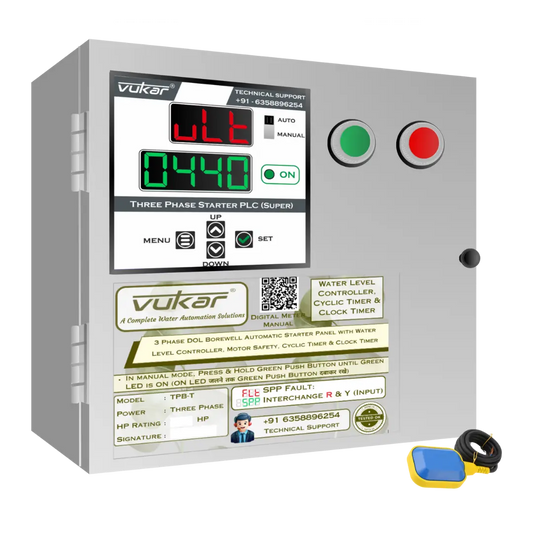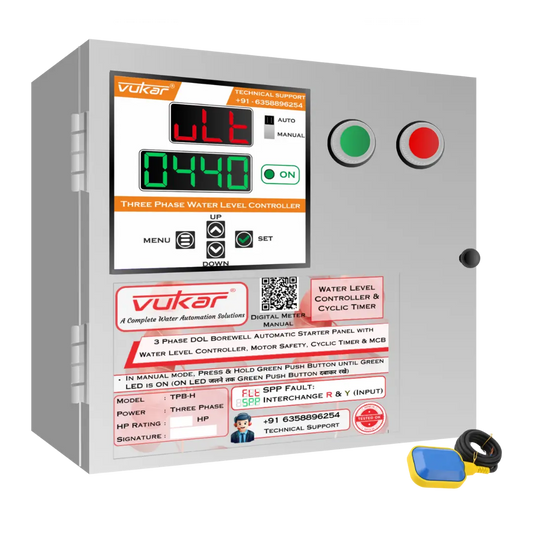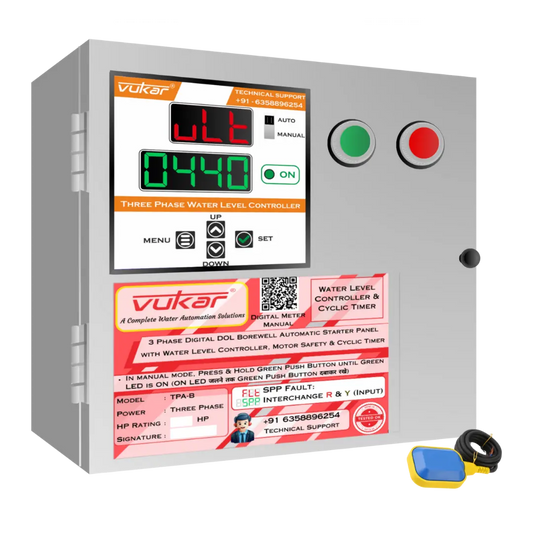

VUKAR BOM-T Borewell Starter Panel: Installation and Clock Timer Settings
Mohit VekariaFor a BOM-T borewell starter panel setup, match the single-phase pump and panel variant first. Use clock timing for chosen hours of the day and cyclic timing for repeating run and rest periods. Check which of those controls the motor in the mode you select. Have a licensed electrical contractor install the panel and use the wiring diagram for the installed model and revision.
BOM-T installation and motor match
Find the motor nameplate or the paperwork for the pump. Record the phase, rated voltage, horsepower (HP) and rated current in amps. Check the BOM-T panel label and share both sets of details with the installer. The product listing shows these options: 0.5 HP, 0.75 HP, 1 HP, 1.5 HP, 2 HP and 3 HP. Have the installer confirm the exact variant and its suitability for the motor and operating duty. See BOM-T specifications and variants
If you are replacing a panel, keep the pump documents and record how the old setup was used. Ask the installer to compare the new panel and motor connections with the supplied diagram. Existing labels can help identify the conductors, while the electrician verifies each connection before energizing.
Ask the installer to verify protective earthing, the supply and motor connections, and the circuit protection for the installation. Where the motor needs capacitors, the installer should confirm the type, rating and connections from the motor and panel documentation. The supply must be isolated and verified off before the enclosure is opened for wiring or service. Central Electricity Authority safety regulations

BOM-T clock timer settings and operating mode
Set the clock and test the active schedule
Start with the time shown on the panel. Confirm the local time and the day or date used by the selected schedule. Have the installer open the appropriate mode and enter the intended operating hours or events using the instructions for that revision. Read back the saved entries. Write them down with the day selection so the operator can check the schedule later.
Identify the active settings in the product instructions before entering or changing values.
Separate the time of day from elapsed run and rest periods. The clock can define a scheduled start or a permitted window. The cyclic timer manages elapsed ON and OFF intervals in its mode. Confirm which rules the selected mode uses and whether a new start is allowed before and after the scheduled boundary. VUKAR pump timer types
Watch one planned start and stop under normal water conditions. If a power interruption affects timing, note the clock value and active mode after power returns. Ask the installer to confirm whether the previous schedule and state are retained for the installed revision.

What matters at this site
A clock setting answers when the pump may operate. Run and rest durations answer how it cycles. Record both rules separately so a technician can tell which rule explains a stop.
Keep the borewell and tank conditions in view during the first run. A borewell can deliver less water as the run continues. Ask the installer to check how delivery changes and follow the pump maker’s limits for operating time and starts. Record what the delivery looks like once the pipe has filled and the flow has settled.
Review the planned daily schedule with whoever uses the borewell. Leave room for seasonal changes in the source and for maintenance. Ask the installer to write down the approved method to suspend the schedule during service and resume it afterward.
How to use BOM-T after installation
Ask the installer to explain the conditions required before starting the pump. Check that the receiving tank or delivery point can accept water, that the source can supply the pump, and that you can use the normal stop control from a dry area. Keep the panel closed during the watched test.
- Confirm the mode and saved settings. Read the active setting and its unit with the installer. Agree on what should make the motor start and what should make it stop in this mode.
- Watch a normal start and stop. Watch a start and stop at the intended clock boundaries. If you also use run/rest timing, verify the cycle behavior within the selected schedule.
- Ask about automatic restart. Confirm what the selected mode does when power returns, a timer becomes eligible, or a protection condition clears. Have the installer explain how to leave the equipment safely isolated for service.
- Record the observed result. Write down the motor rating, panel variant, selected mode, settings, display readings and actual stop or restart behavior. Keep the date and the correct diagram in the same record.
The installer should show the operator how to read the display and stop the pump safely. If the observed behavior differs from the planned sequence, keep the pump under supervision while the installer checks which setting or signal controls the motor. VUKAR manuals and diagrams
What to record during the first test
- Before an operating window
- Read the actual day, time and motor state. Check whether the active mode permits a start at that point.
- At the start boundary
- Record the saved start time, observed start and any other signal that affects whether the motor runs.
- During the active window
- Check steady delivery and, if enabled, observe the next run/rest transition before leaving the pump in automatic operation.
- At the end boundary
- Confirm what ends the run and record whether the pump stays stopped as expected afterward.
Keep the time-of-day entries and the elapsed run or rest settings on separate lines of the handover record. If a second person operates the pump, let them read those entries back and explain the expected start and stop. This will expose a mistaken day selection or mode before the pump is left to run automatically.
If the BOM-T pump stops or fails to start
When a pump runs at the wrong hour, compare the displayed day and time with the saved event and enabled mode. Check recovery behavior with the installer if the timing changed after an outage.
Write down the exact display code and what the pump did just before it appeared. VUKAR uses FOL for overload, FDR for dry run, HIU for high voltage and LOU for low voltage. If the same fault returns, ask the installer to diagnose the cause before operating again. VUKAR fault-code guide

An observed flow change helps narrow down what happened. Record whether water delivery was steady, fell gradually, or stopped at the same instant as the motor. That detail helps the installer decide where to check first on a borewell installation.
Why might a saved clock time pass without a start?
Check the actual time, day selection, enabled event or window, and the active mode. Water-level or protection conditions may also affect the run when those functions are active. Record the display before changing the schedule.
What should the operator record at handover?
Keep the panel label, pump nameplate details, correct wiring reference and observed results together. Record the active mode and clock settings, allowed hours and watched commissioning. Add any conditions the installer checked, such as the normal display at startup and the expected behavior after power returns. When something changes later, this gives the technician the settings and conditions from a known working run.
Recommended BOM-T Settings: Clock Schedule, Run/Rest and Protection