
Can a Failed Pump Capacitor Make the MCB Trip?
VUKARYes, a failed capacitor can contribute to a single phase pump capacitor MCB trip by preventing normal acceleration or causing abnormal motor current. However, a humming pump and a tripped breaker do not prove that the capacitor has failed. Supply problems, a motor fault, a stalled pump, and a faulty starting arrangement can create similar symptoms. The diagnosis must assess the capacitor as part of the motor circuit.
Do not keep resetting the MCB or repeatedly asking the pump to start. A motor that cannot accelerate can be damaged, and a capacitor can retain hazardous charge after disconnection of the power. Preserve the observed sequence and arrange competent diagnosis rather than opening the starter to try a capacitor substitution.
Understand what the capacitor does
A single-phase motor may use a capacitor in its starting arrangement, during running, or in separate start and run functions. The arrangement depends on the exact motor and control box. A start capacitor serves its specified starting duty; a run capacitor serves its stated continuous-duty role. They are not interchangeable merely because both are cylindrical components with two connections.
The capacitor helps establish the motor's intended electrical starting or running conditions. If a required component fails, the motor may fail to develop the intended starting performance or may operate with abnormal winding currents. The MCB does not measure capacitance. It responds according to its overcurrent characteristic when the circuit current reaches the relevant operating conditions.
Franklin Electric's AIM manual portal provides its 50 Hz motor and control-box guidance. Apply the manual for the actual equipment. A statement about one motor arrangement should not be transferred to every surface pump, submersible motor, or starter panel.

A hum is a symptom, not a capacitor verdict
A motor that hums without reaching normal speed may have an electrical starting problem, inadequate supply conditions, a mechanical restriction, or a motor defect. A capacitor is one possibility within that list. The sequence matters: did the motor begin to turn, stop after running, or remain stationary from the first command? Record what was already observed without repeating the event deliberately.
A pump that was running normally and then stopped raises different questions from a pump that never accelerated. Likewise, a breaker opening at the command time is different evidence from a motor overload opening after unsuccessful starts. Neither difference gives a complete diagnosis by itself.
Tell the technician whether the motor, the breaker, or a controller displayed the indication. “The panel tripped” leaves several possibilities unresolved. A photograph of accessible front indications can help, provided it can be taken safely. Do not remove covers, touch the motor to judge its temperature, or reach into the pump to see whether it turns.

Identify which protective device actually operated
An MCB protects against overcurrent. A motor overload function has its own purpose and operating characteristics. An RCCB detects residual-current imbalance, while an RCBO combines residual-current and overcurrent protection. A failed component or insulation fault can involve different protective functions, so the actual device matters.
Read the accessible label or provide an existing record of the device model. Note whether its handle moved, whether other circuits lost power, and whether the starter showed a separate fault indication. Our MCB and RCCB comparison explains why these names should not be used interchangeably.
Do not bypass the overload, hold a contactor in, or increase the breaker rating to keep the pump running. Stopping a trip without correcting its cause can remove protection from the cable or motor. A protective operation is evidence to investigate. It is not permission to disable the function that revealed the problem.
| Observed sequence | What still needs professional assessment |
|---|---|
| Hum without normal acceleration | Supply, starting circuit, motor, and mechanical condition |
| Trip after some running | Actual current, motor loading, connections, and protection |
| Residual-current device opens | Insulation and unintended current paths, not capacitance alone |
Why several faults can look like a bad capacitor
The starting relay or switch may fail to connect or disconnect the starting components as intended. An open connection can interrupt the same circuit. A winding fault, damaged cable, or mechanical restriction can prevent normal operation even with a capacitor that measures within its stated capacitance range. Replacing only the most familiar component can leave the cause untouched.
Fluke's single-phase motor troubleshooting article discusses capacitors and switching mechanisms as separate potential problems. Its general explanation does not supply a replacement specification for an unknown Indian pump motor.
A technician should compare the observed behaviour with the actual circuit and manufacturer procedure. The technician must select and interpret tests in that context. Avoid treating a bulge, a meter reading, or the absence of visible damage as a complete verdict. Some failed components show obvious damage; others require further assessment, and a visually normal capacitor does not establish a healthy starting circuit.
Match the replacement to verified motor data
Capacitor labels normally state capacitance in microfarads, written µF. The voltage marking, start or run duty, tolerance, and other applicable specifications also matter. A higher voltage number alone does not make an otherwise different capacitor a suitable substitute. Nor can a universal horsepower-to-microfarad chart replace the approved motor or control-box specification.
Collect the motor make, complete model, supply frequency, nameplate details, and control-box or starter model from records or safely accessible labels. If the capacitor label is inside an enclosure, let the technician obtain it after proper isolation and stored-charge precautions. A previous replacement could already be incorrect, so copying its label is not always enough.
Ask the supplier or service technician to identify the approved replacement reference and supporting documentation. Where the exact value or arrangement is unavailable, that is missing evidence to resolve before fitting a part. Do not fill the gap with a value taken from a similar-looking pump or a different manufacturer's motor.
What useful testing can and cannot establish
Testing may include the supply under relevant conditions, winding and insulation checks, the starting relay or switch, the capacitor, and mechanical condition. The order and method depend on the actual equipment. These are professional procedures involving isolation, verification, suitable instruments, and control of stored energy.
Franklin's 50 Hz guidance treats component tests within the control-box troubleshooting process. A simple capacitor test can be indicative without proving correct performance under every operating condition. Conversely, an out-of-specification reading needs interpretation against the correct component specification and test method. The wider circuit still matters.
A normal supply reading after the event may miss a starting-related problem. An unloaded motor check may not represent the installed pump load. Ask which conditions the technician actually checked rather than accepting “it works now” as the entire service record. The aim is to establish why normal starting failed and whether the corrective action addresses that cause.

Keep starter selection separate from capacitor replacement
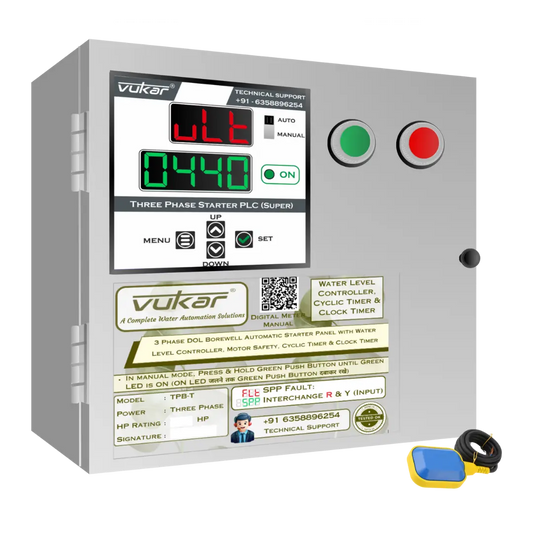
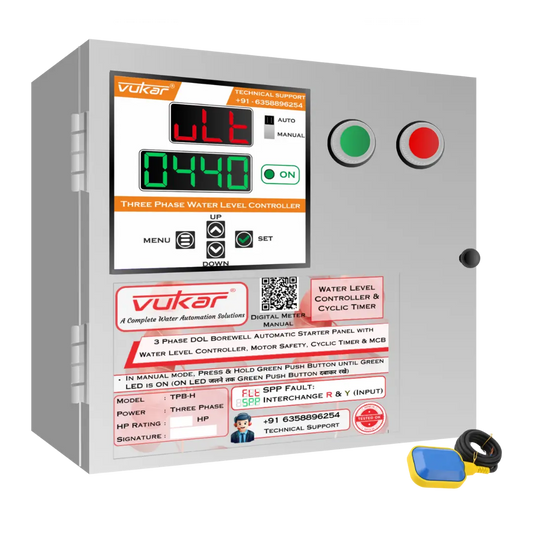
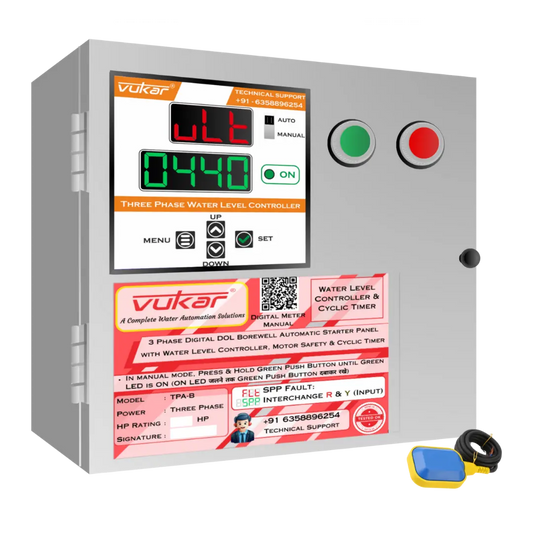
A pump starter with an MCB may provide useful switching and protection features when selected and installed correctly. It does not establish which capacitor your existing motor requires. The genuine related product shown here is a catalogue starter, not a universal capacitor kit or a diagnosis of the faulty installation.
If replacing the starter as well, confirm compatibility with the actual single-phase motor and its starting arrangement. Do not assume every control box contains the same relay, capacitor values, or connection pattern. Specific terminal or component claims need the manufacturer's applicable schematic.
Automatic operation deserves attention after a failed start. Record whether a timer, float control, or other command initiated the event. Preventing uncontrolled repeat attempts is part of the service plan. A schedule change may affect when the symptom appears, but it does not repair a damaged capacitor, motor winding, cable, or switching component.

Ask for the cause and the replacement record
A useful handover names the diagnosed fault, the old and new part references where applicable, and the manufacturer evidence used for selection. It also records the checks made after repair, including whether the motor accelerated normally under relevant operating conditions. This is more useful than a receipt saying only “capacitor changed.”
Keep that record with the motor and starter details. If the problem returns, the next technician can see whether a component was replaced with an approved part and whether another starting-circuit issue was identified. Avoid assuming a second trip automatically means the new capacitor is defective.
Your next step is to stop repeated start attempts, identify the device that opened, and give a competent technician the motor details and observed sequence. Our overload and short-circuit guide helps describe the protection event. Exact component evidence and a complete diagnosis should determine the repair.